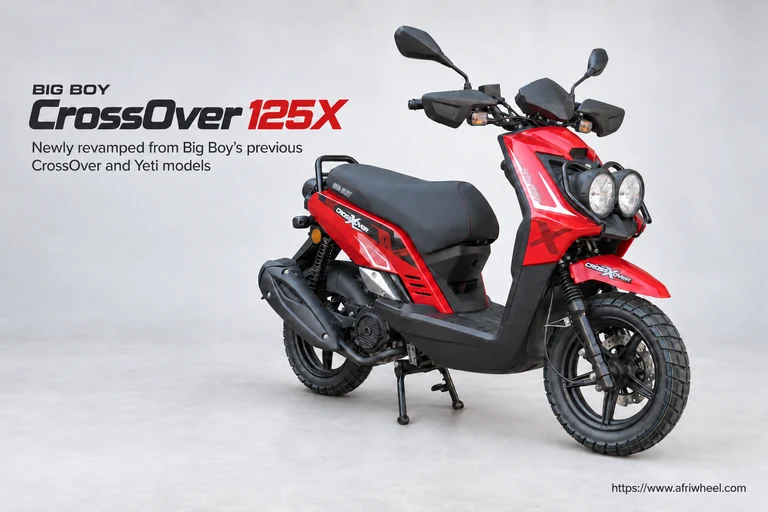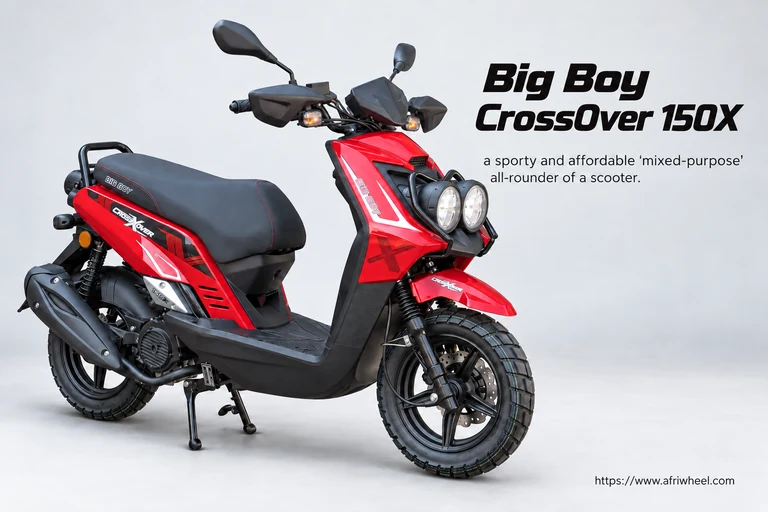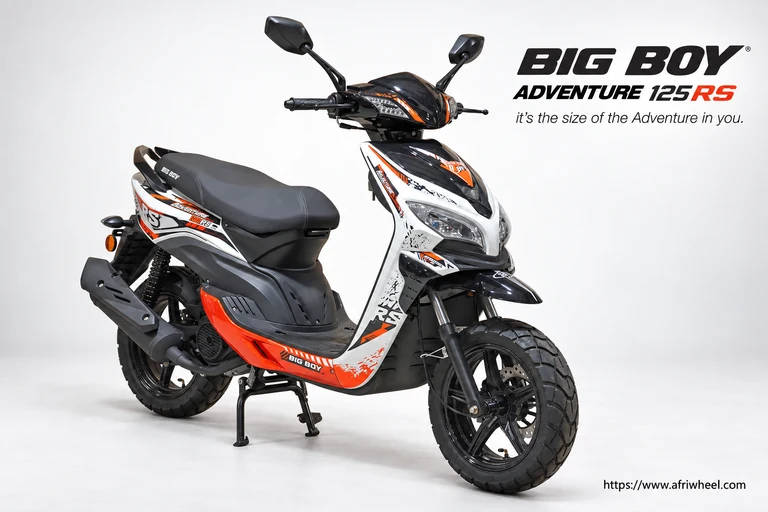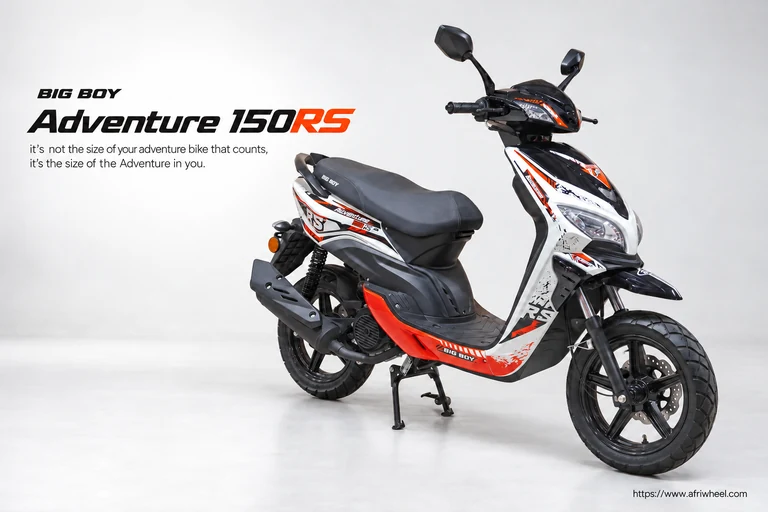
NEXUS 125 buyer overview
The reason to consider NEXUS 125 is its defined job: a practical town machine where low running cost and simple control matter. It is listed for South Africa in 2026 at R19,999. Start with route, rider, passenger, load and support before deciding whether it belongs on the shortlist.
Power comes from a 125 cc petrol unit, with 5.3 kW and 7.5 Nm published. Read those figures alongside the tank, gearing, seat and brakes because a useful purchase is a system that fits the job.
Big Boy records CVT transmission, 5 gears and Chain final drive. Commuters need smooth starts, while work riders need repeatable take-off and low-speed control. Test the exact unit instead of assuming a similar model feels the same.
Big Boy places this model at 1 mm in length, 813 mm in width and 740 mm in height. A 1260 mm wheelbase helps explain turning space, while 780 mm seat height, 140 mm clearance and 120.0 kg mass shape rider confidence and recovery planning.
The rolling package uses 90-inch front and 12-inch rear wheels, with 90/90×12 and 3.50/10 tyres. Braking is listed as Disc at the front and Disc at the rear. Inspect tyre age, pressure, alignment and brake response at handover.
The right question is what the machine must carry and where it must go. The record gives 2 seating position(s) and 150 kg maximum payload. Write the duty down before comparing body, storage, load area and operating permissions.
Fuel planning starts with 2.6 L/100 km and 6 litres of capacity. Actual range can move when loaded or used in slow traffic. Ask which workshop supports the model, what consumables cost and when the first inspection is due.
Use the supplied facts to make a short list, then inspect the exact stock unit. Note how it fits, turns, stops, stores cargo and charges or refuels, and who will service it.
Use this page as a preparation sheet. Measure parking or loading space, plan the route, confirm rider or operator fit and bring the people or cargo that matter.
For this record, the useful comparison line is 2.6 L/100 km and a 6-litre tank. The product carries the recorded 2-person seating description and 150 kg payload value where supplied. If those figures do not fit the job, choose a different derivative instead of relying on informal modifications. Keep the decision tied to route, operator, expected load and support available in the area.
The recorded South African listing for NEXUS 125 is priced at R19,999. Its scooters role, 2-person seating and 150 kg payload value should be read with the exact dimensions and operating limits shown above.
The catalogue position is clearer when the buyer starts with the job rather than the badge. Think about the first and last trip of a normal week, the surface between them, who will ride or operate the machine, and what must be carried. That short description exposes whether this product’s size, control layout and powertrain are sensible. It also gives the dealer a useful brief for demonstrating the exact stock unit and quoting the right support package.
Use the model page as a focused conversation starter. Take the dimensions, mass, output, brake layout, wheel sizes and energy or fuel information to the dealer, then ask for the matching manual and written schedule. Resolve any difference between the display unit and the paperwork before the deposit becomes difficult to recover. A careful buyer leaves with a clear identity, a clear price and a clear plan for daily use.
Think about the full first year rather than only the purchase price. Add expected fuel or charging, tyres, brake wear, service labour, storage, transport and any practical accessories. Record who will do the work and how far that support is from the operating site. The same model can be good value for one route and poor value for another because distance, load and service access change the ownership burden.
South African ownership begins after the transaction. Before paying, ask who performs the first inspection, where routine work is done, which wear items are stocked and how a warranty claim is opened. Keep the exact model and variant name on the quotation, along with colour, equipment, price, delivery terms and any registration paperwork. This prevents a family label from being substituted for the particular machine that was discussed.
Every range claim or fuel figure needs context. Traffic, road speed, wind, hills, payload, tyre pressure, battery temperature and maintenance all influence the distance achieved. Use the listed value to compare the model with a close alternative, then build a route reserve rather than planning to the last kilometre or litre. A realistic weekly plan is more useful than repeating a best-case number from a product page.
Brakes and tyres deserve attention equal to the engine or motor. Confirm the tyre markings, pressure recommendations, wheel condition and brake response on delivery. For a utility product, ask how the permitted load changes stopping distance and how often the working surface damages tyres. For a road machine, make sure the rider understands the controls before carrying a passenger or adding luggage.