South Africa catalogue Prices in ZAR · Sources dated on every model
Dual purposeActive

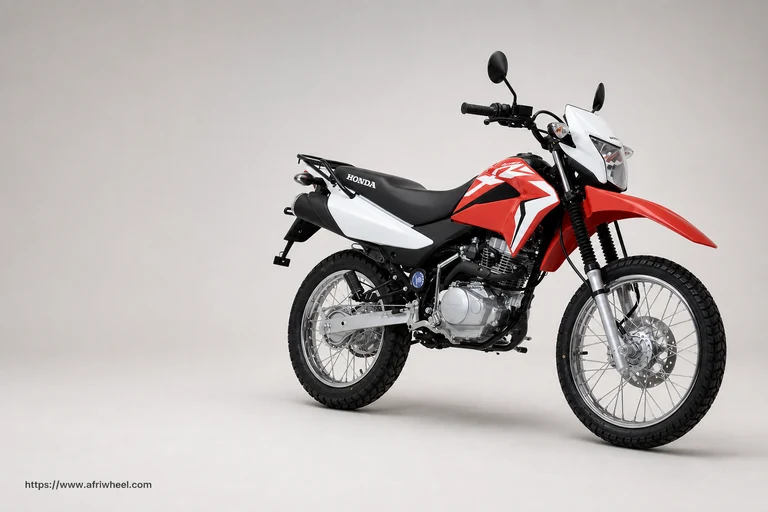
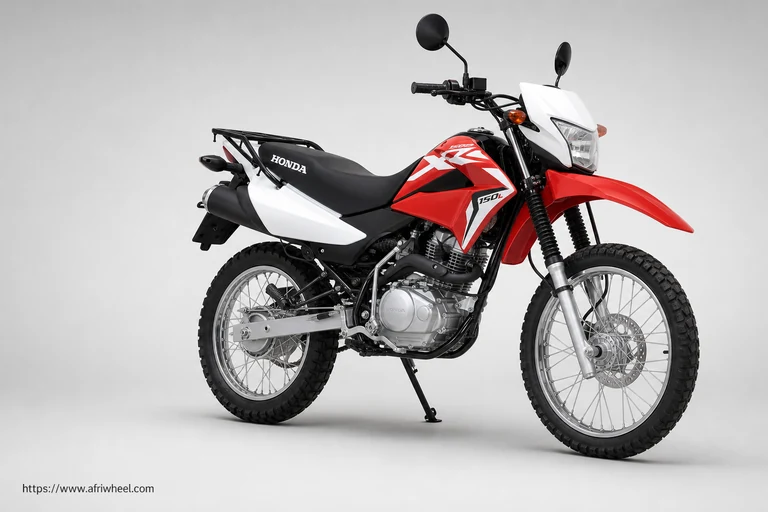
Big Boy TSR250

TSR250 is a South African Big Boy motorcycle using a 223 cc petrol engine, Manual transmission and 3.0 L/100 km recorded fuel use. Its listed price is R27,999; the supplied figures also include 18.75 kW, a 10-litre tank and 800 mm seat. Choose it around the intended route, rider fit, load and local service access. Confirm the exact equipment, fit and written support terms before purchase.

Riding characterAdventure and dual-purpose riding

Dual-purpose motorcycles are built to divide their time between tarmac and rougher surfaces. Wheel sizes, ground clearance, suspension travel, tyres and loaded mass tell the real story.

Best matched to: Mixed surfaces, touring routes and light off-road travel
South Africa price fromR27,999Dealer-advertised vehicle price; final on-road quote may differ.
Max power18.75 kW (25.1 bhp)
Claimed fuel use3.0 L/100 km

✓ Lineup and price checked 1 October 2026 from Midlands Big Boy

Model-specific AfriWheel overview

TSR250 buyer overview

Big Boy presents TSR250 as a mixed-surface motorcycle for paved roads and slower unsealed sections. The local record gives a listed price of R27,999 for this 2026 entry. Treat that amount as the commercial opening and ask for a quotation identifying the exact machine, equipment and handover terms.

Big Boy lists a 223 cc petrol engine producing 18.75 kW and 18.3 Nm. Use that output to compare like-for-like products, then judge throttle response, clutch take-up, low-speed balance and braking on the intended route.

The stated drivetrain uses Manual with 5 gears and Chain. Pay attention to gear selection, drive response, brake feel, steering effort and the space required to turn around safely.

The physical package is 2050 by 800 by 1100 mm, with 1350 mm between the axles. The 800 mm seat and 155.0 kg listed mass help decide who can manage it, while 180 mm ground clearance should be compared with the actual route or loading area.

The contact points are specific: 90-inch front, 19-inch rear, 90/90×19 and 110/90×17. Big Boy records Disc braking ahead of Disc braking behind. Work buyers should match the tyres to the ground and keep the load within its boundary.

Payload and seating make the role concrete: 2 occupant(s) and 170 kg maximum payload in the supplied record. Those are limits to respect. Confirm where cargo sits, how it is secured and how repeated duty affects tyres, brakes and service.

The listed 3.0 L/100 km and 10-litre tank help compare refuelling frequency. They say nothing about warranty exclusions or parts access, so ask the dealer to explain service timing, wear items and support arrangements.

Use the supplied facts to make a short list, then inspect the exact stock unit. Note how it fits, turns, stops, stores cargo and charges or refuels, and who will service it.

At the showroom, check mounting height, control reach, steering lock, visibility, brake effort, tyre markings, fluid levels, fasteners and lighting. If it carries a passenger or load, reproduce that use safely.

For this record, the useful comparison line is 3.0 L/100 km and a 10-litre tank. The product carries the recorded 2-person seating description and 170 kg payload value where supplied. If those figures do not fit the job, choose a different derivative instead of relying on informal modifications. Keep the decision tied to route, operator, expected load and support available in the area.

The recorded South African listing for TSR250 is priced at R27,999. Its dual-purpose role, 2-person seating and 170 kg payload value should be read with the exact dimensions and operating limits shown above.

South African ownership begins after the transaction. Before paying, ask who performs the first inspection, where routine work is done, which wear items are stocked and how a warranty claim is opened. Keep the exact model and variant name on the quotation, along with colour, equipment, price, delivery terms and any registration paperwork. This prevents a family label from being substituted for the particular machine that was discussed.

Use the model page as a focused conversation starter. Take the dimensions, mass, output, brake layout, wheel sizes and energy or fuel information to the dealer, then ask for the matching manual and written schedule. Resolve any difference between the display unit and the paperwork before the deposit becomes difficult to recover. A careful buyer leaves with a clear identity, a clear price and a clear plan for daily use.

Think about the full first year rather than only the purchase price. Add expected fuel or charging, tyres, brake wear, service labour, storage, transport and any practical accessories. Record who will do the work and how far that support is from the operating site. The same model can be good value for one route and poor value for another because distance, load and service access change the ownership burden.

The body style sets expectations but does not answer every legal or operating question. A work vehicle may be intended for controlled property, while a road model may still need documents and equipment checked for the buyer’s use. Ask the seller to state the permitted use, seating arrangement and registration position in writing where these affect the decision. Do not infer them from a photograph or a seat shape.

The catalogue position is clearer when the buyer starts with the job rather than the badge. Think about the first and last trip of a normal week, the surface between them, who will ride or operate the machine, and what must be carried. That short description exposes whether this product’s size, control layout and powertrain are sensible. It also gives the dealer a useful brief for demonstrating the exact stock unit and quoting the right support package.

Every range claim or fuel figure needs context. Traffic, road speed, wind, hills, payload, tyre pressure, battery temperature and maintenance all influence the distance achieved. Use the listed value to compare the model with a close alternative, then build a route reserve rather than planning to the last kilometre or litre. A realistic weekly plan is more useful than repeating a best-case number from a product page.
South Africa derivatives

Variants and prices

Currency: ZAR
VariantTransmissionStatusObserved price
TSR250 — current South African listing Specs shown View variant editorial & specsSee confirmed specificationsActiveR27,999

The model price label states the evidence basis. Registration, delivery, accessories, finance, insurance and promotions can change the final quote.

Confirmed facts only

Key specifications

TSR250 — current South African listing

Power unit and performance

Engine type
4-stroke
Engine configuration
Single-cylinder
Engine displacement
223 cc
Engine cylinders
1
Valvetrain
SOHC
Valves per cylinder
2
Cooling system
Air-cooled
Bore
57 mm
Stroke
55 mm
Compression ratio
9.5
Maximum power
18.75 kW (25.1 bhp)
Engine speed at maximum power
7500 rpm
Maximum torque
18.3 Nm
Engine speed at maximum torque
7000 rpm
Claimed top speed
125 km/h
Ignition system
CDI electronic
Starter system
Electric
Lubrication system
Wet sump
Engine oil capacity
1.0 L

Transmission and final drive

Transmission type
Manual
Gear count
5
Gear shift pattern
1-N-2-3-4-5
Clutch type
Wet multi-plate
Primary drive type
Gear
Final drive type
Chain

Fuel, battery and efficiency

Fuel type
Petrol
Fuel supply system
Petrol
Fuel metering system
Carburettor
Fuel tank capacity
10 L
Fuel reserve capacity
1.5 L
Claimed fuel consumption
3.0 L/100 km
Tested fuel consumption
3.94 L/100 km
Calculated riding range
282 km
Recommended fuel grade
Unleaded petrol 95 RON

Dimensions and capacities

Overall length
2050 mm
Overall width
800 mm
Overall height
1100 mm
Wheelbase
1350 mm
Minimum ground clearance
180 mm
Seat height
800 mm
Kerb weight
155.0 kg
Dry weight
147.5 kg
Gross vehicle weight
330 kg
Maximum payload
170 kg
Seating capacity
2
Turning circle diameter
4.6 m

Frame and chassis

Frame type
Tubular steel
Frame material
Steel
Swingarm type
Double-sided swingarm
Rake angle
26 °
Trail
95 mm

Suspension

Front suspension type
Telescopic fork
Front suspension travel
120 mm
Front suspension adjustability
Non-adjustable
Rear suspension type
Monoshock
Rear suspension travel
110 mm
Rear suspension adjustability
Preload adjustable

Brakes and rider safety

Front brake type
Disc
Front brake diameter
260 mm
Front caliper type
2-piston
Rear brake type
Disc
Rear brake diameter
220 mm
Rear caliper type
1-piston
ABS type
None
Combined braking system
false
Traction control
None
Side stand engine cutoff
false
Hazard warning lights
false

Wheels and tyres

Front wheel size
90 in
Rear wheel size
19 in
Wheel type
Alloy
Front tyre size
90/90×19
Rear tyre size
110/90×17
Tyre construction
Bias-ply
Tyre fitment type
Tube
Recommended front tyre pressure
200 kPa
Recommended rear tyre pressure
225 kPa

Electrical and lighting

Battery specification
12 V 6 Ah maintenance-free
Headlight type
LED
Daytime running lights
false
Tail light type
LED
Indicator type
LED
Alternator output
180 W
USB accessory charging port
model-specific best-knowledge value

Instrumentation and connectivity

Instrument console type
Digital / analogue combination
Display size
3.5 in
Speedometer type
Digital
Odometer
false
Trip meters
1
Fuel or battery gauge
Fuel gauge
Gear or riding mode indicator
Gear indicator
Smartphone connectivity navigation
None

Ergonomics and comfort

Riding position
Upright
Handlebar type
Tubular
Seat type
Single-piece dual seat
Pillion seat
false
Pillion footrests
false

Utility and practicality

Rear carrier load rack
No
Under seat storage
0 L
Centre stand
false

Service and warranty

Vehicle warranty period
36 months
Vehicle warranty distance
20000 km
First service interval
500 km
Regular service interval
3000 km
Battery warranty period
0 months
Battery warranty distance
0 km

Emissions and compliance

Emission standard
Euro 3 / local homologation
Road legal homologation status
Road legal South Africa
CO₂ emissions
82.3 g/km
Stationary noise
88 dB(A)
Evidence-backed editorial

Highlights and fit

Pros supported by the local source

  • No unsupported pro has been added.

Who it may suit

Best for: a mixed-use motorcycle with more surface tolerance than a street bike

Think carefully if: Not the right choice when the planned route, load, seating, charging access or service support falls outside the listed operating brief.

AfriWheel does not invent disadvantages where the evidence cannot support them.

Official listed finishes

Colours

BlackBlueRedWhite
Common buying questions

Big Boy TSR250 FAQs

No FAQ is published without an evidence map.

Evidence trail

Primary sources and limits

Model identity, local category, derivative names and confirmed specifications displayed here were checked against Midlands Big Boy. Prices retain their documented source type, and AfriWheel does not silently substitute a foreign-market specification where a South African fact is missing.

Big Boy South Africa TSR250 product page ↗Big Boy South Africa completed model and variant specification collection ↗Specification document ↗Accessed 1 October 2026Reliability tier 2