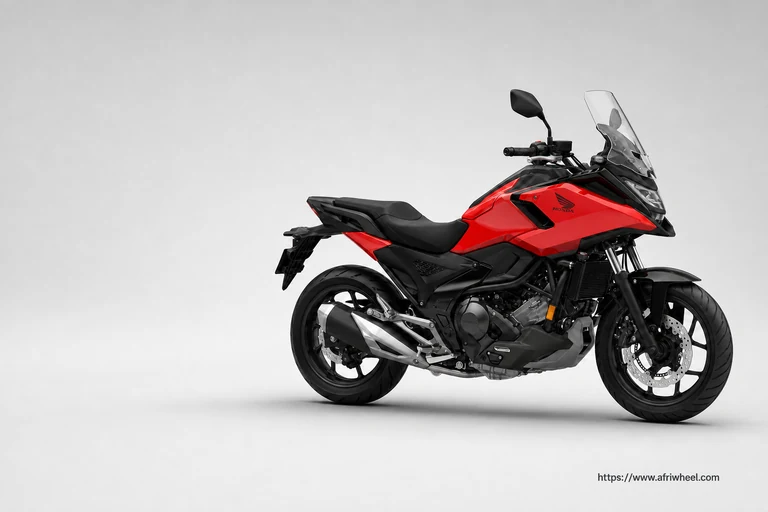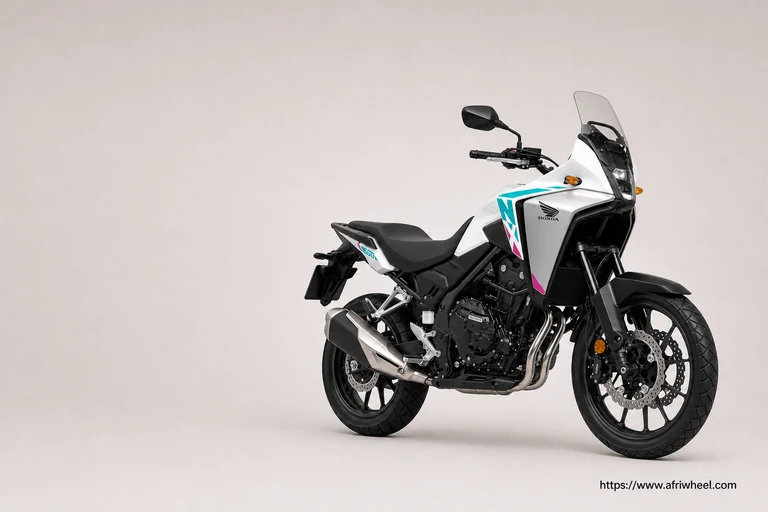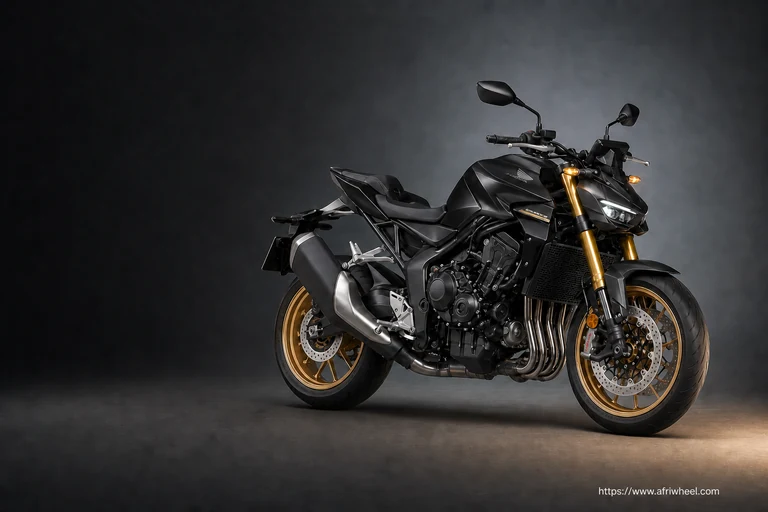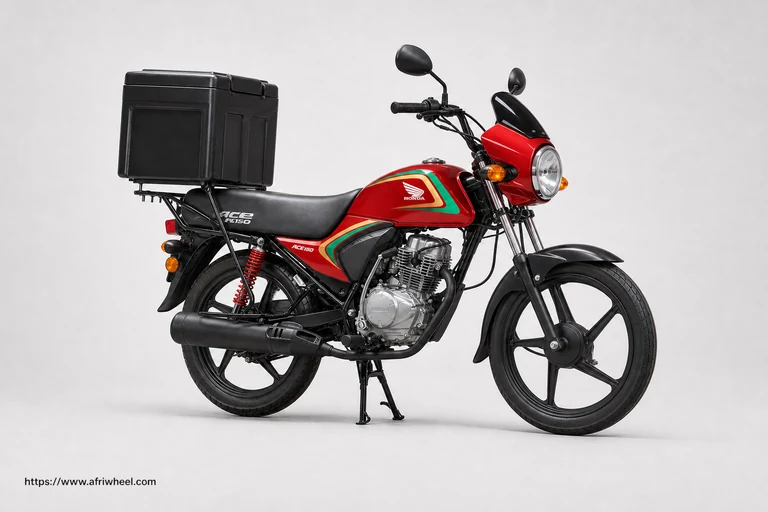
CB750 Hornet buyer overview
Market identity
Honda Motor Southern Africa places the CB750 Hornet in its street catalogue and describes a product that is a lightweight naked road bike built around Honda's 755 cc parallel twin and a broad electronic rider-aid package. The identity matters before any number is compared: AfriWheel has tied this record to the South African product page, its linked specification sheet, the 2026 listing and the named local derivatives. A similarly titled motorcycle from Europe, Asia or another African distributor is not treated as interchangeable. This separation protects the CB750 Hornet page from generation drift, imported trim names and equipment claims that Honda has not made for South Africa.
Range and pricing
The reviewed CB750 Hornet line-up records CB750 Hornet at R149,999. The lowest published amount is therefore R149,999, but that number is a manufacturer-recommended retail reference rather than a complete on-road quotation. Stock timing, registration, delivery, accessories, paint charges, insurance, finance and a retailer promotion can change the transaction. The useful comparison is the cash amount for the full derivative name, followed by an itemised list of additions. AfriWheel dates the CB750 Hornet price observation to 4 August 2026 so a future change can create history instead of silently overwriting what shoppers previously saw.
Purpose and shortlist fit
The clearest reason to shortlist the CB750 Hornet is its stated role: a lightweight naked road bike built around Honda's 755 cc parallel twin and a broad electronic rider-aid package. That positioning is a starting hypothesis, not a promise that the motorcycle suits every route or body shape. A useful decision maps the intended week—commuting distance, passenger use, luggage, surface quality, parking, fuel access and highway exposure—against the physical machine. The CB750 Hornet should be assessed alongside alternatives serving the same job, rather than against an unrelated motorcycle chosen only because its price or engine badge appears close. Fit and control reach remain personal and need a static inspection or test ride where appropriate.
Dimensions and rider interface
The available CB750 Hornet size record covers seat height of 795 mm, and kerb weight of 190 kg. A seat-height figure must be read with seat width, suspension sag and the rider's proportions; kerb weight does not reveal how mass feels while lifting the machine from its stand. Ground clearance also has different importance on paved commutes, gravel travel and closed-course use. Sit on the exact CB750 Hornet derivative with normal footwear, move the handlebar through its range, reach both levers, test the stand and consider low-speed balance. A specification table can narrow the shortlist, but it cannot certify personal comfort or confidence.
Chassis and suspension
Honda's reviewed documents let AfriWheel record frame construction and suspension measurements that have not yet been published locally for the CB750 Hornet. Fork diameter, travel or adjustability describes hardware; none of those facts alone proves ride quality. Springs and damping interact with total load, tyres, road condition and setup. A prospective CB750 Hornet owner should ask which adjustments are genuinely provided, whether the handbook gives load settings and how passenger or luggage use changes the recommendation. Competition and off-road machines need an especially exact use-case check, because a compliant trail setting, motocross setting and road-touring setting pursue different priorities even when component names appear impressive.
Controls and practical equipment
The CB750 Hornet equipment evidence includes instrument console type of Full-colour TFT, and smartphone connectivity navigation of Honda smartphone connectivity. AfriWheel treats a feature as standard only when the exact-country source establishes it; accessory availability is a separate question. Storage volume, display size, charging ports, navigation and lighting can be useful, but their relevance depends on the rider's routine. During inspection, operate the controls with gloves, view the display in daylight, check phone compatibility where listed and place normal luggage in the available carrying area. Request a quotation that separates factory equipment from dealer-fitted additions so the delivered CB750 Hornet can be checked against what was promised.
Colours and visual identity
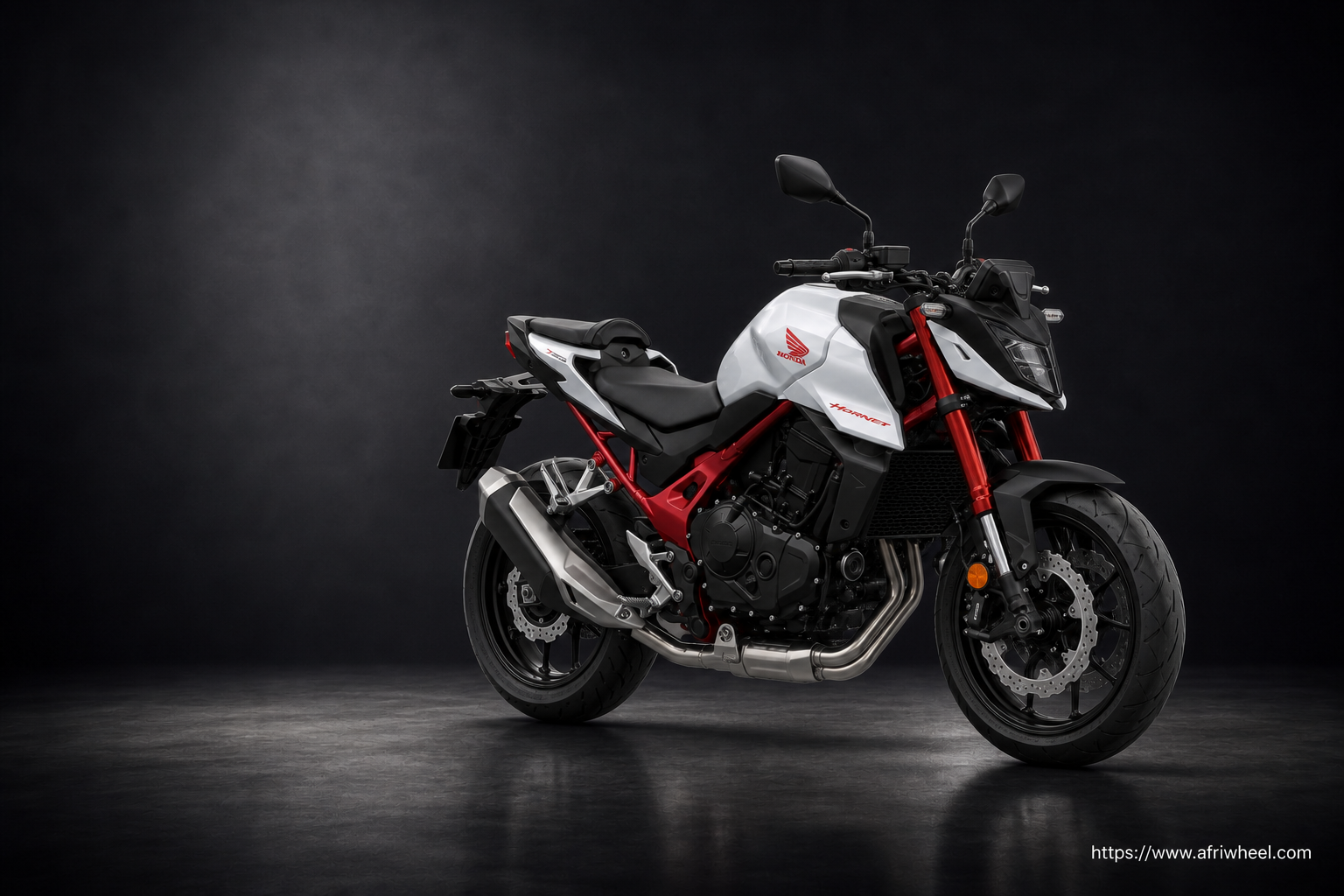
Honda South Africa lists these CB750 Hornet finishes in the reviewed material: Pearl Glare White, Mat Goldfinch Yellow. AfriWheel preserves each official wording because pearl, matt, metallic and multi-colour treatments can be distinct orderable choices. A colour shown on another country's configurator does not establish South African supply. The image gallery is intentionally scheduled for a later reviewed phase, so this release uses no borrowed product photograph and no visual placeholder as evidence. Until the gallery passes its separate rights, accuracy, consistency, watermark and Git LFS gates, confirm the paint code and finish on the order form and inspect the actual CB750 Hornet unit before handover.
Service, warranty and documents
The available CB750 Hornet ownership record includes vehicle warranty period of 24 months, and vehicle warranty distance of Unlimited. Manufacturer warranty wording can contain eligibility, inspection, time, distance and maintenance conditions, so a headline period should not replace the supplied booklet. Ask the selling outlet for the VIN-linked warranty statement, service intervals, first-service timing, consumable exclusions, roadside arrangements if any and the location of suitable workshops. For a road vehicle, also match the registration description to the ordered CB750 Hornet. For an ATV or competition motorcycle, obtain written confirmation of permitted use and transport needs rather than interpreting engine capacity as proof of road registration.