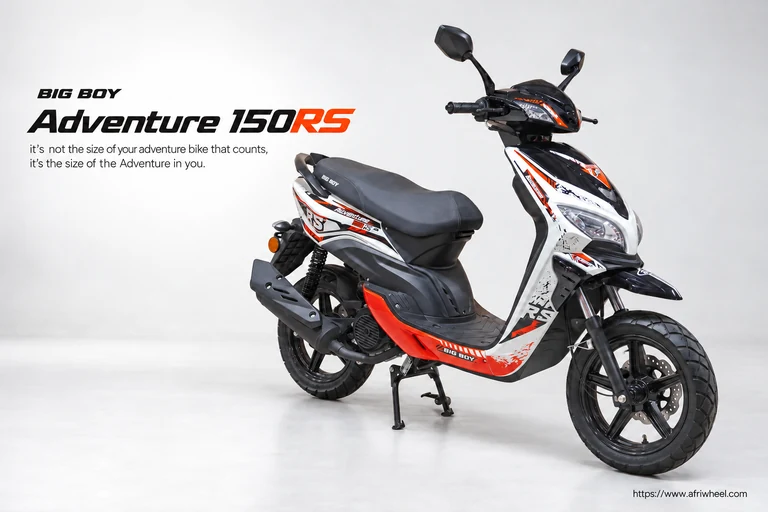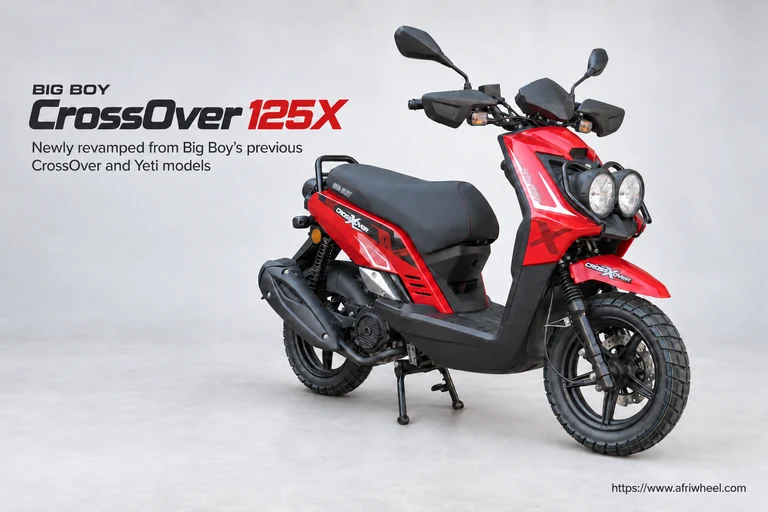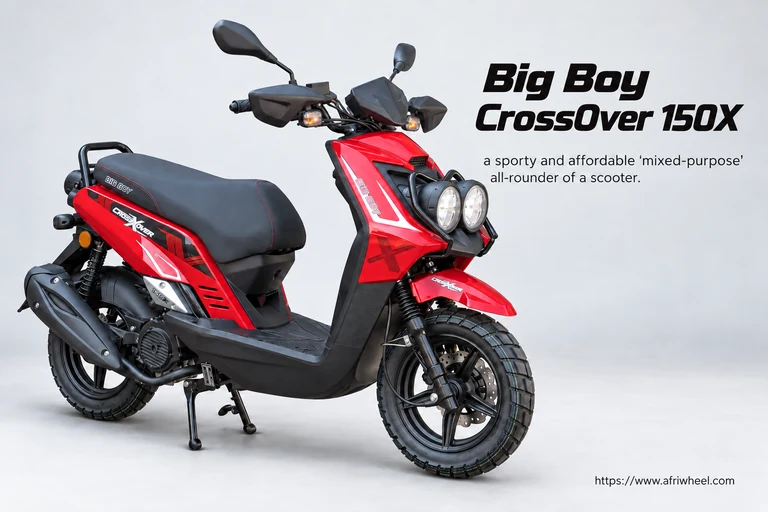
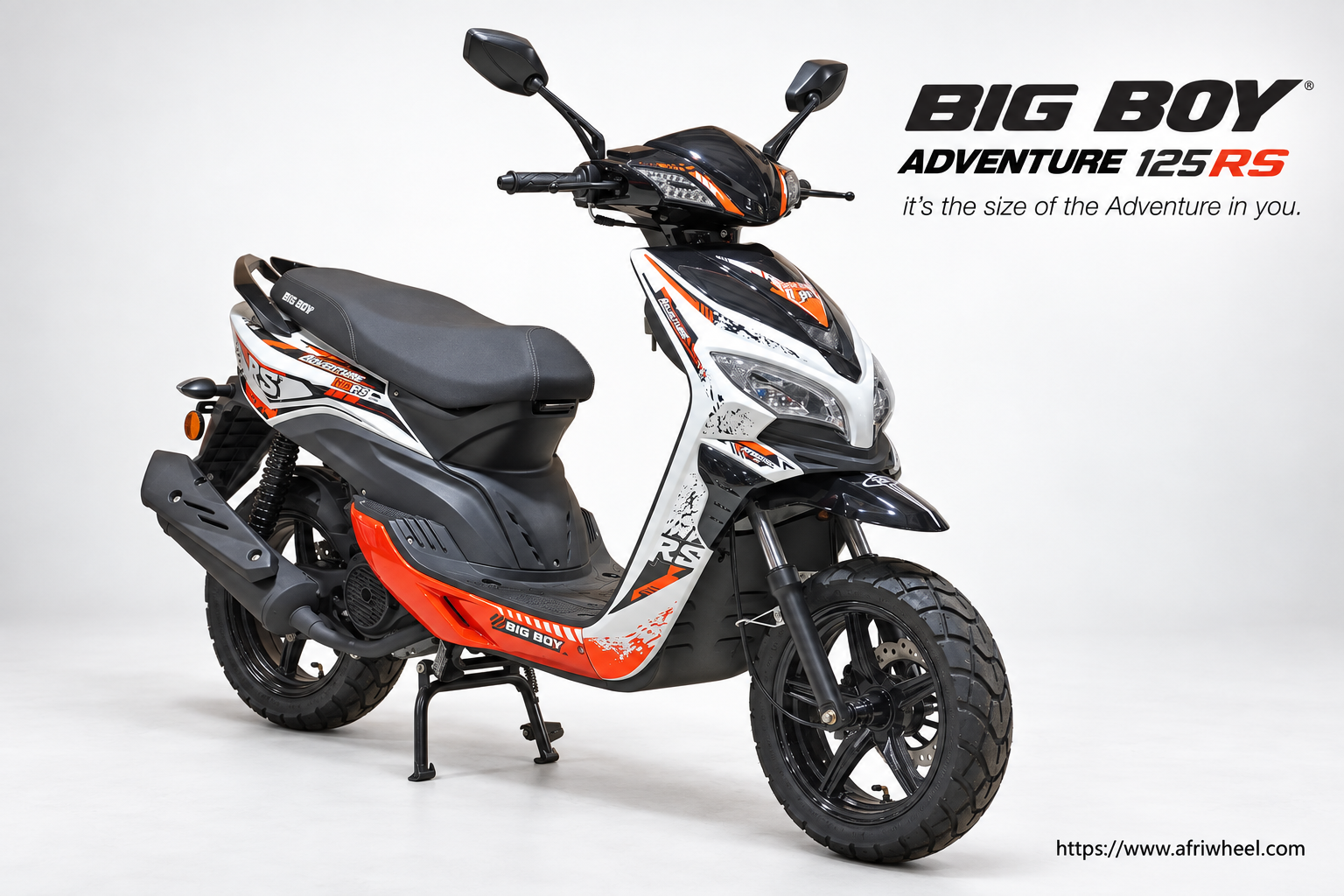
Adventure 125RS — current South African listing buyer overview
On the local listing, Adventure 125RS — current South African listing identifies the specific Adventure 125RS record. The recorded amount is R20,999. That matters where a range contains cargo, commercial, electric or similarly named products with different loads, batteries, wheels or controls.
The mechanical centre is a 125 cc petrol engine rated at 5.42 kW and 7.51 Nm. That describes its catalogue position without promising acceleration. A test ride with the intended rider or operator remains the useful check.
Control comes through 5-speed manual and 5 listed ratios, driving the Chain final drive. A handover should cover clutch effort, steering lock, throttle response and loaded behaviour as well as the headline specification.
Big Boy places this model at 1900 mm in length, 720 mm in width and 1120 mm in height. A 1320 mm wheelbase helps explain turning space, while 780 mm seat height, 140 mm clearance and 120.0 kg mass shape rider confidence and recovery planning.
The contact points are specific: 17-inch front, 17-inch rear, 90/90-17 and 110/80-17. Big Boy records Disc braking ahead of Disc braking behind. Work buyers should match the tyres to the ground and keep the load within its boundary.
Payload and seating make the role concrete: 2 occupant(s) and 150 kg maximum payload in the supplied record. Those are limits to respect. Confirm where cargo sits, how it is secured and how repeated duty affects tyres, brakes and service.
The listed 2.68 L/100 km and 6-litre tank help compare refuelling frequency. They say nothing about warranty exclusions or parts access, so ask the dealer to explain service timing, wear items and support arrangements.
The variant label matters when products share a family name. For Adventure 125RS — current South African listing, check colour, body fittings, charger or tools, seating, payload and paperwork. Those details can change ownership even when a general model description looks similar.
The purchase is ready when physical unit and paperwork agree. Inspect Adventure 125RS — current South African listing, record its condition, verify price and support terms, and plan maintenance around the real route rather than a best-case claim.
For this record, the useful comparison line is 2.68 L/100 km and a 6-litre tank. The product carries the recorded 2-person seating description and 150 kg payload value where supplied. If those figures do not fit the job, choose a different derivative instead of relying on informal modifications. Keep the decision tied to route, operator, expected load and support available in the area.
This exact Adventure 125RS — current South African listing record is priced at R20,999. Keep its model name, powertrain, seating, payload, range or fuel figure and equipment together when comparing it with another Big Boy listing.
The derivative label is important because a single family can contain different batteries, bodies, load arrangements or commercial equipment. Keep this exact variant name on the quotation and match it to the machine on the floor. Ask the salesperson to list what is standard, what is optional and what is shown only for illustration. A small change in configuration can alter the useful range, carrying limit, service routine or delivery expectation.
Use this derivative as the reference point for future comparisons. Record the exact name, model year, price, colour, equipment and date, then compare competing products on the same basis. This avoids using a lower family price to judge a more equipped version or assuming that a different battery type, commercial body or wheel package will deliver the same result.
A variant’s value is connected to its duty cycle. A work-focused configuration may justify a larger payload or a different body, while a commuter configuration may be easier to park and cheaper to run. State the daily job, distance, rider count and storage arrangement before choosing. If the configuration does not support that brief, changing to the correct derivative is safer than adapting it informally.
Service planning is part of variant selection. Note the first inspection, recurring interval, oil or filter requirements, chain or drive checks, tyre pressures and battery care instructions. Ask which tasks are time-based and which are distance-based. A variant that fits the route but cannot be supported at the required intervals will create avoidable downtime.
Ask the dealer to explain how the exact variant is supported after delivery. Confirm service location, first inspection, consumables, battery or charger coverage where relevant, warranty exclusions and the route for obtaining parts. Keep those answers with the written quotation. The product is ready to buy when the paperwork, displayed equipment and operator’s understanding all describe the same derivative.
When this derivative is compared with a nearby listing, hold the two specifications side by side. Check the powertrain, wheel and tyre combination, brake hardware, seating, payload, charger or fuel system and price. Do not borrow a figure from a sibling model simply because the names look similar. The purpose of a variant page is to make the actual buying decision precise enough for a written offer and a correct handover.