Adventure 150RS — current South African listing buyer overview
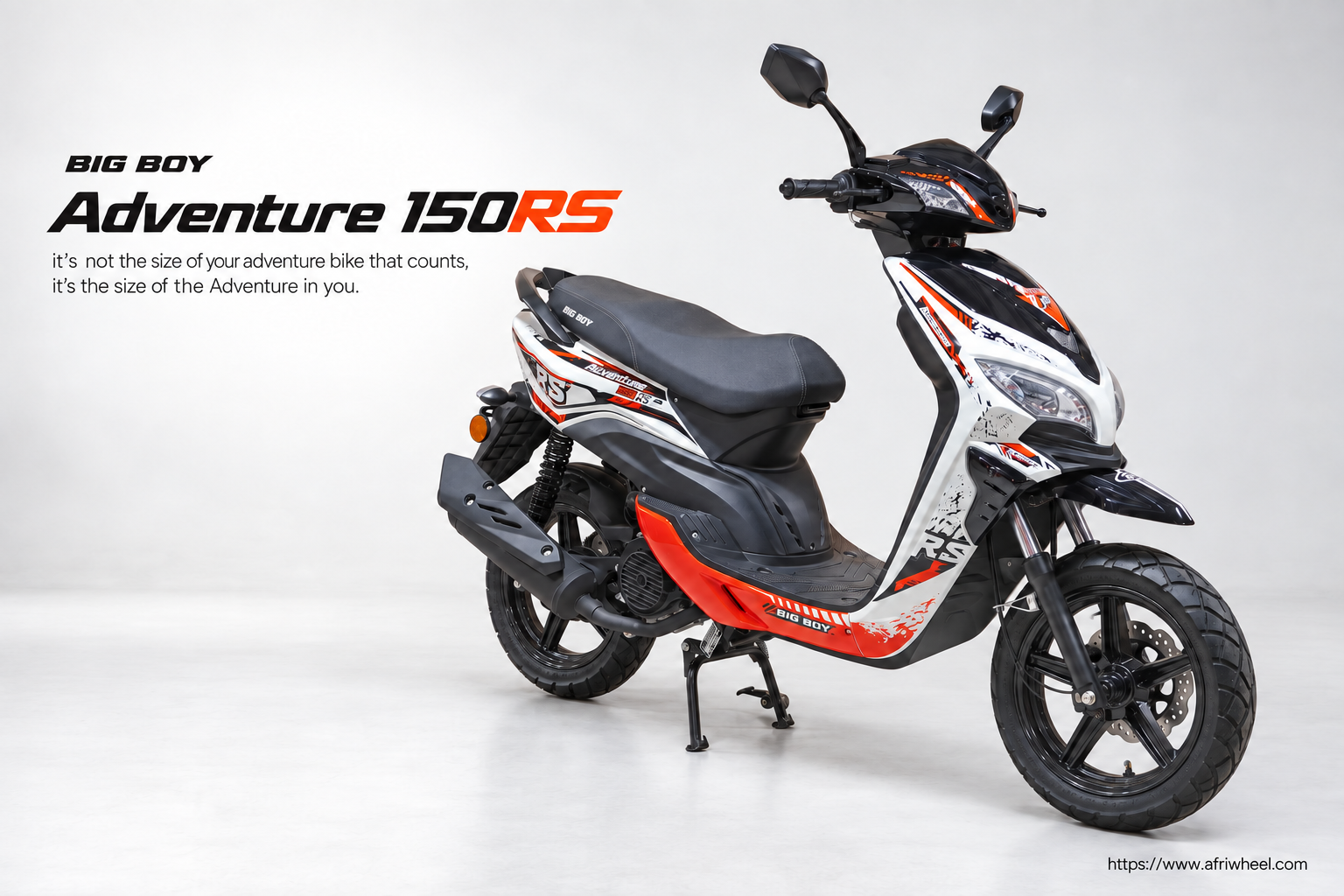
Adventure 150RS — current South African listing is the derivative a buyer should put on the quotation when comparing Adventure 150RS. Big Boy lists it at R20,999 in South Africa. Its appeal depends on whether the delivered equipment and operating limits fit the planned route or job.
The petrol unit is 150 cc, with 5.74 kW and 7.96 Nm in the supplied record. Those numbers locate the model in the local range, but they do not guarantee a particular speed because gearing, rider mass, wind, gradient and load change the result.
Control comes through 5-speed manual and 5 listed ratios, driving the Chain final drive. A handover should cover clutch effort, steering lock, throttle response and loaded behaviour as well as the headline specification.
The physical package is 1900 by 720 by 1120 mm, with 1320 mm between the axles. The 780 mm seat and 123.0 kg listed mass help decide who can manage it, while 140 mm ground clearance should be compared with the actual route or loading area.
The record gives 17-inch and 17-inch wheels, 90/90-17 front rubber and 110/80-17 rear rubber, with Disc front and Disc rear brakes. Those details describe the equipment; a demonstration shows how it turns and stops on the buyer’s surface.
The practical limit is the listed 2-person seating and 150 kg maximum payload where supplied. Compare those figures with riders, tools, cargo, racks and accessories together. A tray or passenger seat is not permission to exceed the boundary.
The ownership calculation uses 2.45 L/100 km and a 6-litre tank, but do not turn those numbers into a guaranteed trip distance. Keep a reserve, check pressure and use the written service schedule.
The variant label matters when products share a family name. For Adventure 150RS — current South African listing, check colour, body fittings, charger or tools, seating, payload and paperwork. Those details can change ownership even when a general model description looks similar.
A handover check for Adventure 150RS — current South African listing should cover fit, steering, braking, tyres, lights, fasteners and promised accessories. Ask the dealer to explain service timing and operating limits, then keep the quotation and manuals with the vehicle record.
For this record, the useful comparison line is 2.45 L/100 km and a 6-litre tank. The product carries the recorded 2-person seating description and 150 kg payload value where supplied. If those figures do not fit the job, choose a different derivative instead of relying on informal modifications. Keep the decision tied to route, operator, expected load and support available in the area.
This exact Adventure 150RS — current South African listing record is priced at R20,999. Keep its model name, powertrain, seating, payload, range or fuel figure and equipment together when comparing it with another Big Boy listing.
Ask the dealer to explain how the exact variant is supported after delivery. Confirm service location, first inspection, consumables, battery or charger coverage where relevant, warranty exclusions and the route for obtaining parts. Keep those answers with the written quotation. The product is ready to buy when the paperwork, displayed equipment and operator’s understanding all describe the same derivative.
The derivative label is important because a single family can contain different batteries, bodies, load arrangements or commercial equipment. Keep this exact variant name on the quotation and match it to the machine on the floor. Ask the salesperson to list what is standard, what is optional and what is shown only for illustration. A small change in configuration can alter the useful range, carrying limit, service routine or delivery expectation.
Weight and load should be treated together. The listed mass describes the vehicle, while payload covers people, cargo, accessories and any additions. Keep those figures within the stated boundary and position heavy items securely. An operator who plans around the advertised maximum every day should ask about the route, braking, tyres, suspension and service effects before deciding that the variant is suitable.
The best test is representative. Ride or operate the exact variant at the speeds, surfaces and load conditions that matter, within the permitted limits. Try the turning space, braking effort, control reach, access height and parking routine. If it is electric, connect the supplied charger; if it is a cargo or utility product, inspect how the load is restrained. This is where a family description becomes a practical choice.
When this derivative is compared with a nearby listing, hold the two specifications side by side. Check the powertrain, wheel and tyre combination, brake hardware, seating, payload, charger or fuel system and price. Do not borrow a figure from a sibling model simply because the names look similar. The purpose of a variant page is to make the actual buying decision precise enough for a written offer and a correct handover.
Colour and visible equipment can create confusion at handover. Confirm the exact finish, decals, racks, lights, seat, tray, battery case and charger or tools included in the price. Photograph the delivered unit and retain the invoice, manual and warranty details. That simple record makes it easier to resolve a mismatch between the variant ordered and the machine supplied.