SuperLight 125 buyer overview
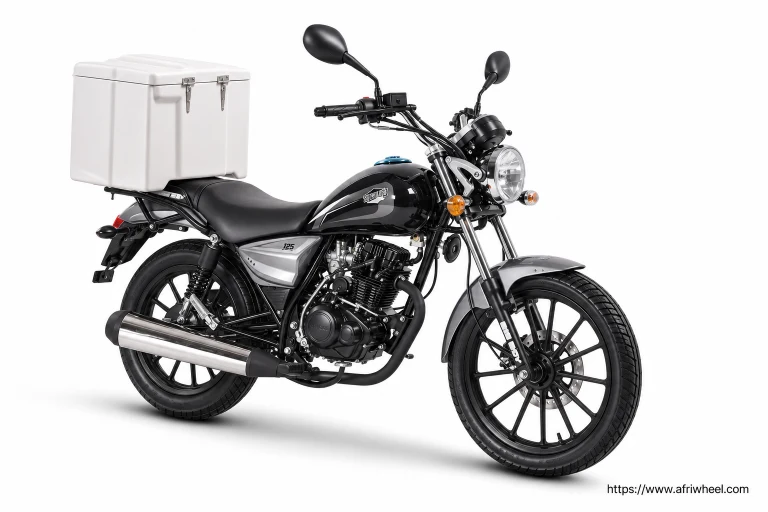
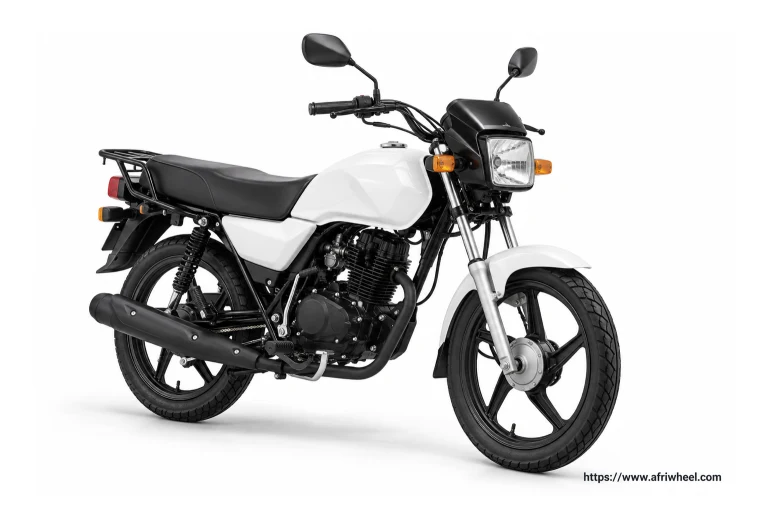
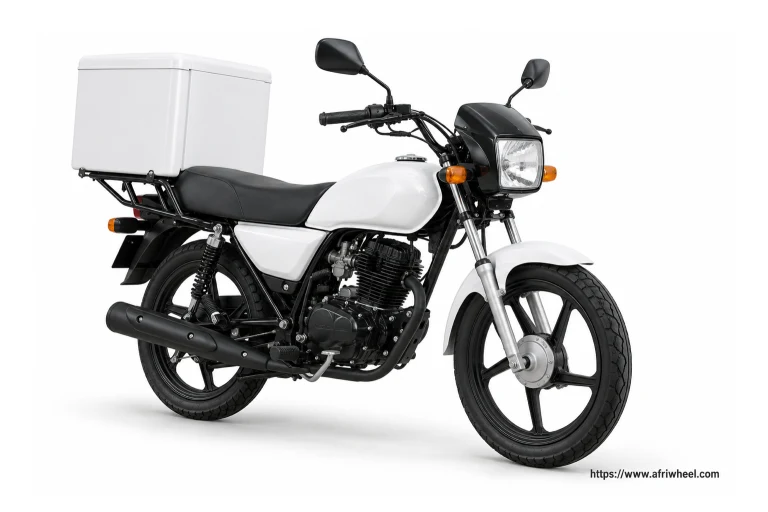
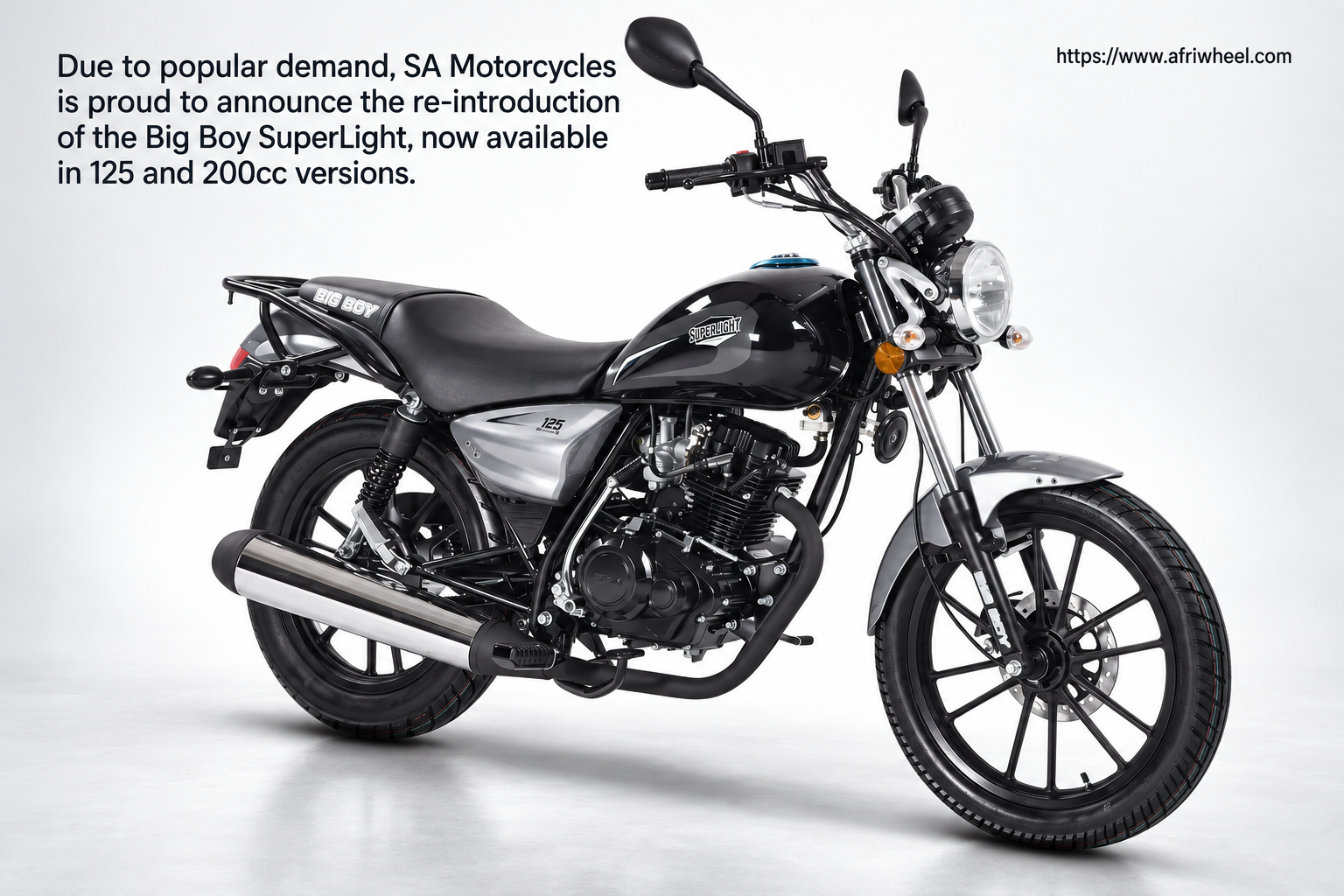
SuperLight 125 is a compact road machine for daily travel and occasional open-road use. The South African Big Boy listing places the 2026 product at R20,999; that amount is the starting point for a written quote, not a promise that delivery, registration or accessories are included.
The petrol unit is 125 cc, with 7.9 kW and 9.5 Nm in the supplied record. Those numbers locate the model in the local range, but they do not guarantee a particular speed because gearing, rider mass, wind, gradient and load change the result.
Control comes through 5-speed manual and 5 listed ratios, driving the Chain final drive. A handover should cover clutch effort, steering lock, throttle response and loaded behaviour as well as the headline specification.
Its recorded envelope is 2050 mm long, 800 mm wide and 1100 mm high, with a 1295 mm wheelbase. The seat is 800 mm high, clearance is 180 mm and mass is 132.5 kg. These figures guide parking, loading, mounting and transport; they do not replace a fit check.
The road or work feel is shaped by 17-inch front and 17-inch rear wheels, 90/90-17/110/80-17 tyres and Disc/Disc braking. Before delivery, check markings, pressures, wheel condition, lever travel and lighting.
The right question is what the machine must carry and where it must go. The record gives 2 seating position(s) and 170 kg maximum payload. Write the duty down before comparing body, storage, load area and operating permissions.
The listed 2.49 L/100 km and 10-litre tank help compare refuelling frequency. They say nothing about warranty exclusions or parts access, so ask the dealer to explain service timing, wear items and support arrangements.
This model makes sense when body style, powertrain, wheel package, carrying limit and price support a defined need. Make the decision around one route or job, then verify handover details.
Ask for the exact model on the quotation, current price, equipment, colour, delivery timing, warranty, service intervals and registration documents. Electric buyers should add charger, battery chemistry, charge time and range basis.
For this record, the useful comparison line is 2.49 L/100 km and a 10-litre tank. The product carries the recorded 2-person seating description and 170 kg payload value where supplied. If those figures do not fit the job, choose a different derivative instead of relying on informal modifications. Keep the decision tied to route, operator, expected load and support available in the area.
The recorded South African listing for SuperLight 125 is priced at R20,999. Its street role, 2-person seating and 170 kg payload value should be read with the exact dimensions and operating limits shown above.
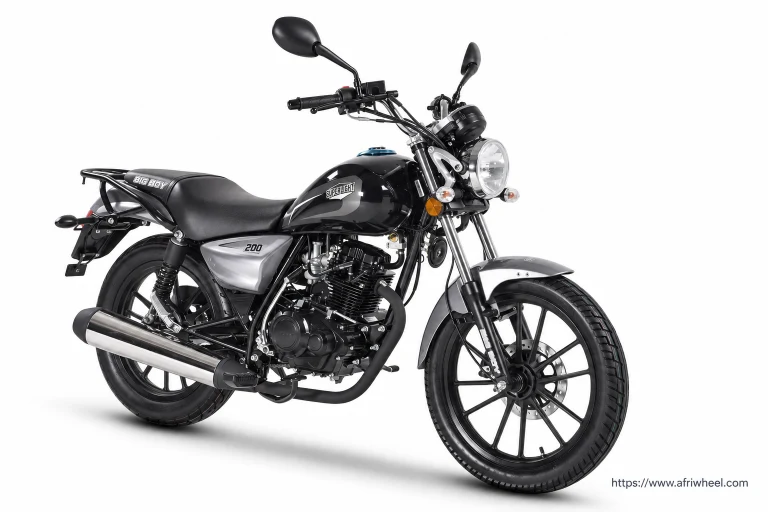
The body style sets expectations but does not answer every legal or operating question. A work vehicle may be intended for controlled property, while a road model may still need documents and equipment checked for the buyer’s use. Ask the seller to state the permitted use, seating arrangement and registration position in writing where these affect the decision. Do not infer them from a photograph or a seat shape.
South African ownership begins after the transaction. Before paying, ask who performs the first inspection, where routine work is done, which wear items are stocked and how a warranty claim is opened. Keep the exact model and variant name on the quotation, along with colour, equipment, price, delivery terms and any registration paperwork. This prevents a family label from being substituted for the particular machine that was discussed.
Use the model page as a focused conversation starter. Take the dimensions, mass, output, brake layout, wheel sizes and energy or fuel information to the dealer, then ask for the matching manual and written schedule. Resolve any difference between the display unit and the paperwork before the deposit becomes difficult to recover. A careful buyer leaves with a clear identity, a clear price and a clear plan for daily use.
The catalogue position is clearer when the buyer starts with the job rather than the badge. Think about the first and last trip of a normal week, the surface between them, who will ride or operate the machine, and what must be carried. That short description exposes whether this product’s size, control layout and powertrain are sensible. It also gives the dealer a useful brief for demonstrating the exact stock unit and quoting the right support package.
Every range claim or fuel figure needs context. Traffic, road speed, wind, hills, payload, tyre pressure, battery temperature and maintenance all influence the distance achieved. Use the listed value to compare the model with a close alternative, then build a route reserve rather than planning to the last kilometre or litre. A realistic weekly plan is more useful than repeating a best-case number from a product page.
A price comparison only helps when the products being compared perform the same role. A small road scooter, a cargo derivative and a utility machine can sit near one another in a catalogue while carrying different limits and requiring different storage. Keep the recorded amount beside the equipment list, payload, seating, energy or fuel plan and service route. The lowest number is not automatically the most economical choice if the machine cannot complete the real duty.