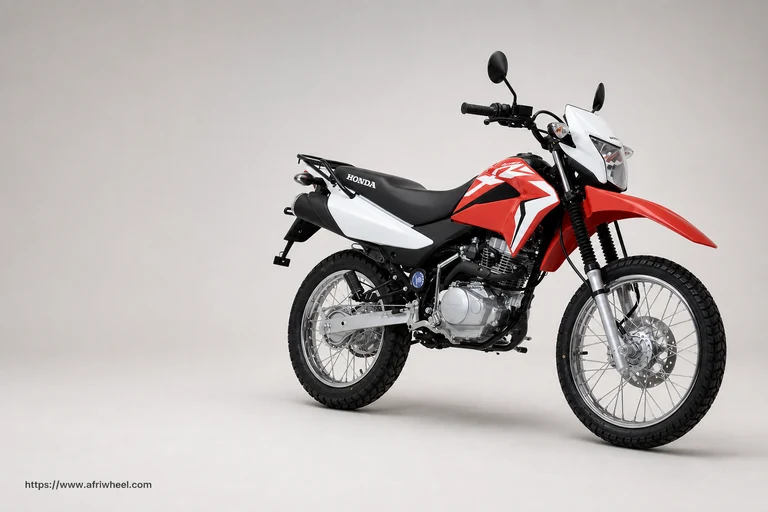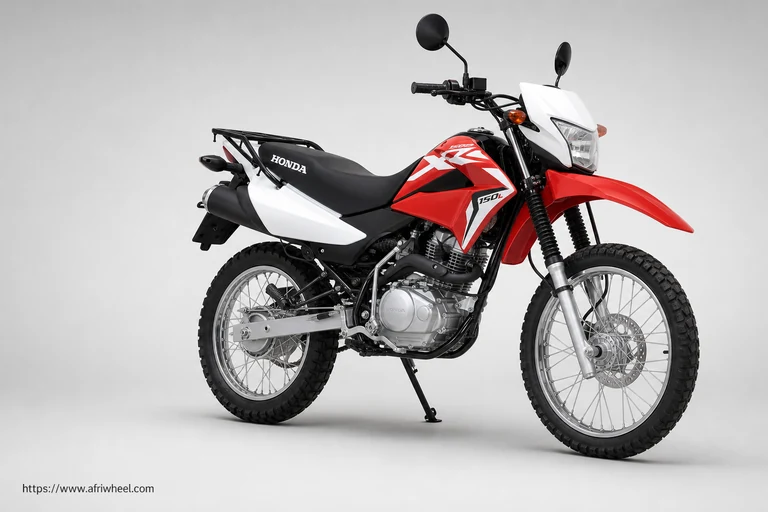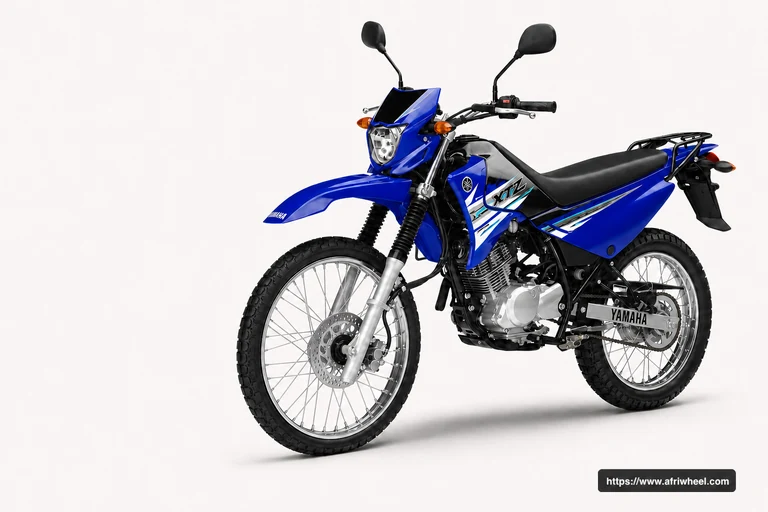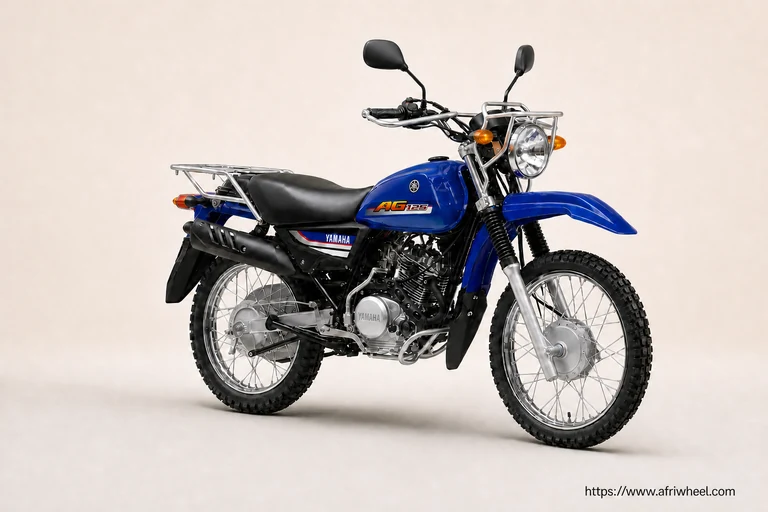
TSR 250 Commercial — current South African listing buyer overview
The exact derivative here is TSR 250 Commercial — current South African listing, the current South African listing for TSR 250 Commercial. It is a petrol motorcycle at R27,999. Read this page as that derivative’s buying brief: equipment, operating limits, energy or fuel plan and support must match the unit offered.
The mechanical centre is a 223 cc petrol engine rated at 18.75 kW and 18.3 Nm. That describes its catalogue position without promising acceleration. A test ride with the intended rider or operator remains the useful check.
Control comes through Manual and 5 listed ratios, driving the Chain final drive. A handover should cover clutch effort, steering lock, throttle response and loaded behaviour as well as the headline specification.
Big Boy places this model at 2050 mm in length, 800 mm in width and 1100 mm in height. A 1350 mm wheelbase helps explain turning space, while 800 mm seat height, 180 mm clearance and 155.0 kg mass shape rider confidence and recovery planning.
The rolling package uses 90-inch front and 19-inch rear wheels, with 90/90×19 and 110/90×17 tyres. Braking is listed as Disc at the front and Disc at the rear. Inspect tyre age, pressure, alignment and brake response at handover.
Use the real job to test the fit. Big Boy records 2 occupant(s) and 170 kg maximum payload, so a commercial buyer should plan restraint, route width, turning space and recovery. A road rider should consider passenger comfort and secure luggage.
Big Boy records 3.0 L/100 km and a 10-litre tank. Treat that as a comparison measure, not a guarantee: traffic, gradients, wind, load, idling, pressure and maintenance affect weekly fuel use. Confirm fuel, oil, running-in and first-service instructions.
As the exact TSR 250 Commercial derivative, TSR 250 Commercial — current South African listing should be compared by equipment and duty cycle rather than nameplate alone. Confirm what is included, whether the displayed body or battery configuration matches the stock unit, and how the dealer supports this reference.
Before accepting TSR 250 Commercial — current South African listing, match model name, propulsion, colour, price, equipment and warranty to the signed order. Check controls, tyres, brakes, lighting and any load area. For an electric unit test the charger; for a petrol unit check fuel and oil instructions.
For this record, the useful comparison line is 3.0 L/100 km and a 10-litre tank. The product carries the recorded 2-person seating description and 170 kg payload value where supplied. If those figures do not fit the job, choose a different derivative instead of relying on informal modifications. Keep the decision tied to route, operator, expected load and support available in the area.
This exact TSR 250 Commercial — current South African listing record is priced at R27,999. Keep its model name, powertrain, seating, payload, range or fuel figure and equipment together when comparing it with another Big Boy listing.
Ask the dealer to explain how the exact variant is supported after delivery. Confirm service location, first inspection, consumables, battery or charger coverage where relevant, warranty exclusions and the route for obtaining parts. Keep those answers with the written quotation. The product is ready to buy when the paperwork, displayed equipment and operator’s understanding all describe the same derivative.
Colour and visible equipment can create confusion at handover. Confirm the exact finish, decals, racks, lights, seat, tray, battery case and charger or tools included in the price. Photograph the delivered unit and retain the invoice, manual and warranty details. That simple record makes it easier to resolve a mismatch between the variant ordered and the machine supplied.
Use this derivative as the reference point for future comparisons. Record the exact name, model year, price, colour, equipment and date, then compare competing products on the same basis. This avoids using a lower family price to judge a more equipped version or assuming that a different battery type, commercial body or wheel package will deliver the same result.
A variant’s value is connected to its duty cycle. A work-focused configuration may justify a larger payload or a different body, while a commuter configuration may be easier to park and cheaper to run. State the daily job, distance, rider count and storage arrangement before choosing. If the configuration does not support that brief, changing to the correct derivative is safer than adapting it informally.
When this derivative is compared with a nearby listing, hold the two specifications side by side. Check the powertrain, wheel and tyre combination, brake hardware, seating, payload, charger or fuel system and price. Do not borrow a figure from a sibling model simply because the names look similar. The purpose of a variant page is to make the actual buying decision precise enough for a written offer and a correct handover.
Weight and load should be treated together. The listed mass describes the vehicle, while payload covers people, cargo, accessories and any additions. Keep those figures within the stated boundary and position heavy items securely. An operator who plans around the advertised maximum every day should ask about the route, braking, tyres, suspension and service effects before deciding that the variant is suitable.