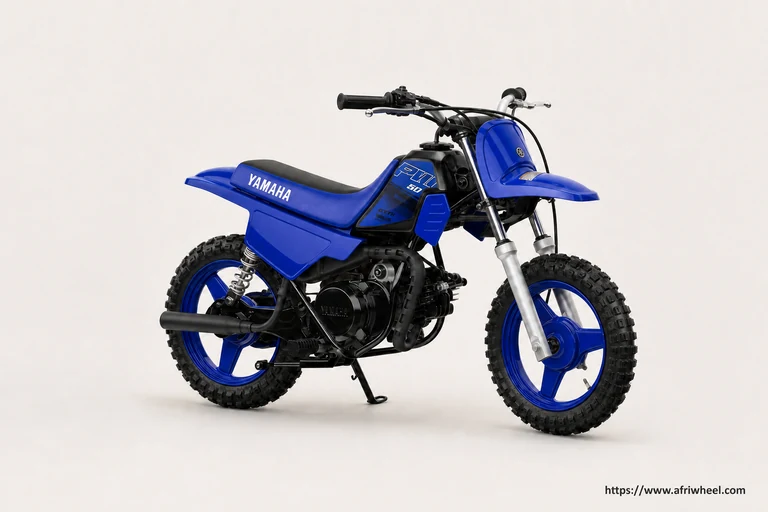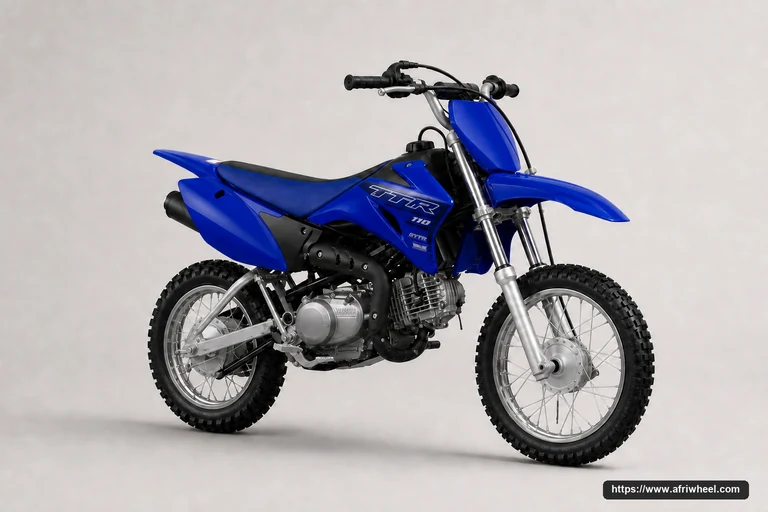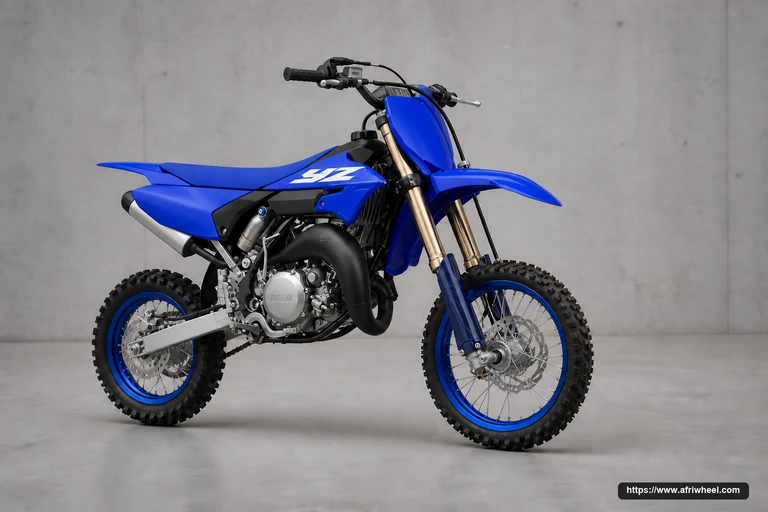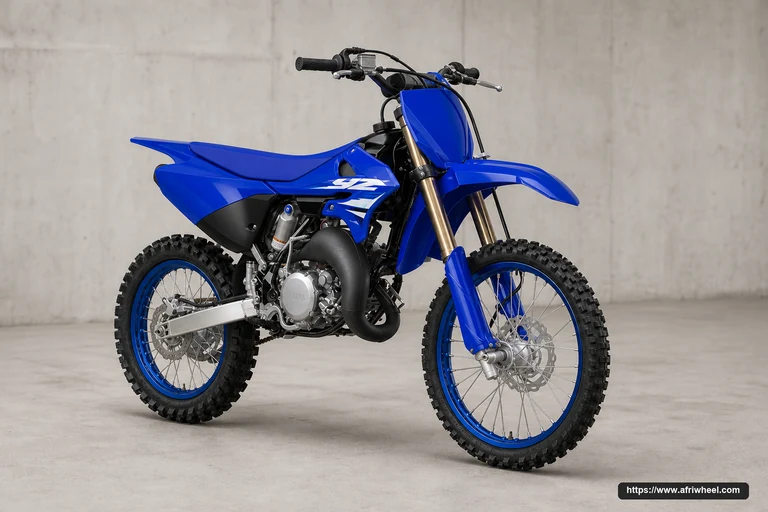
TT-R50E buyer overview
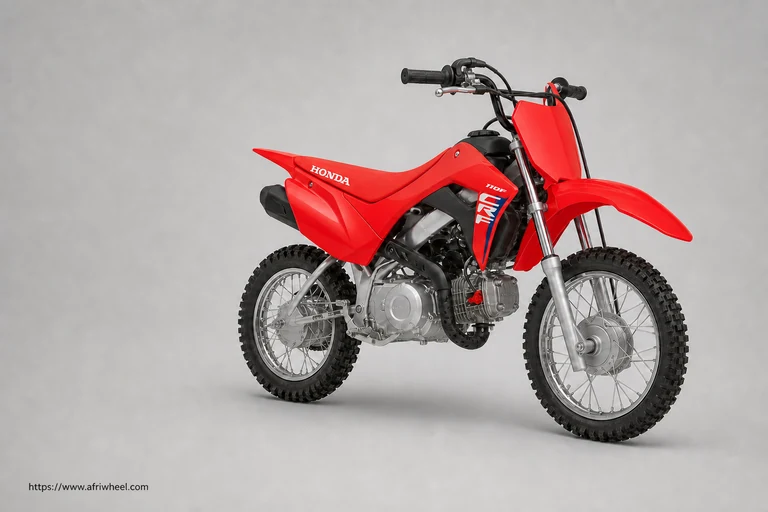
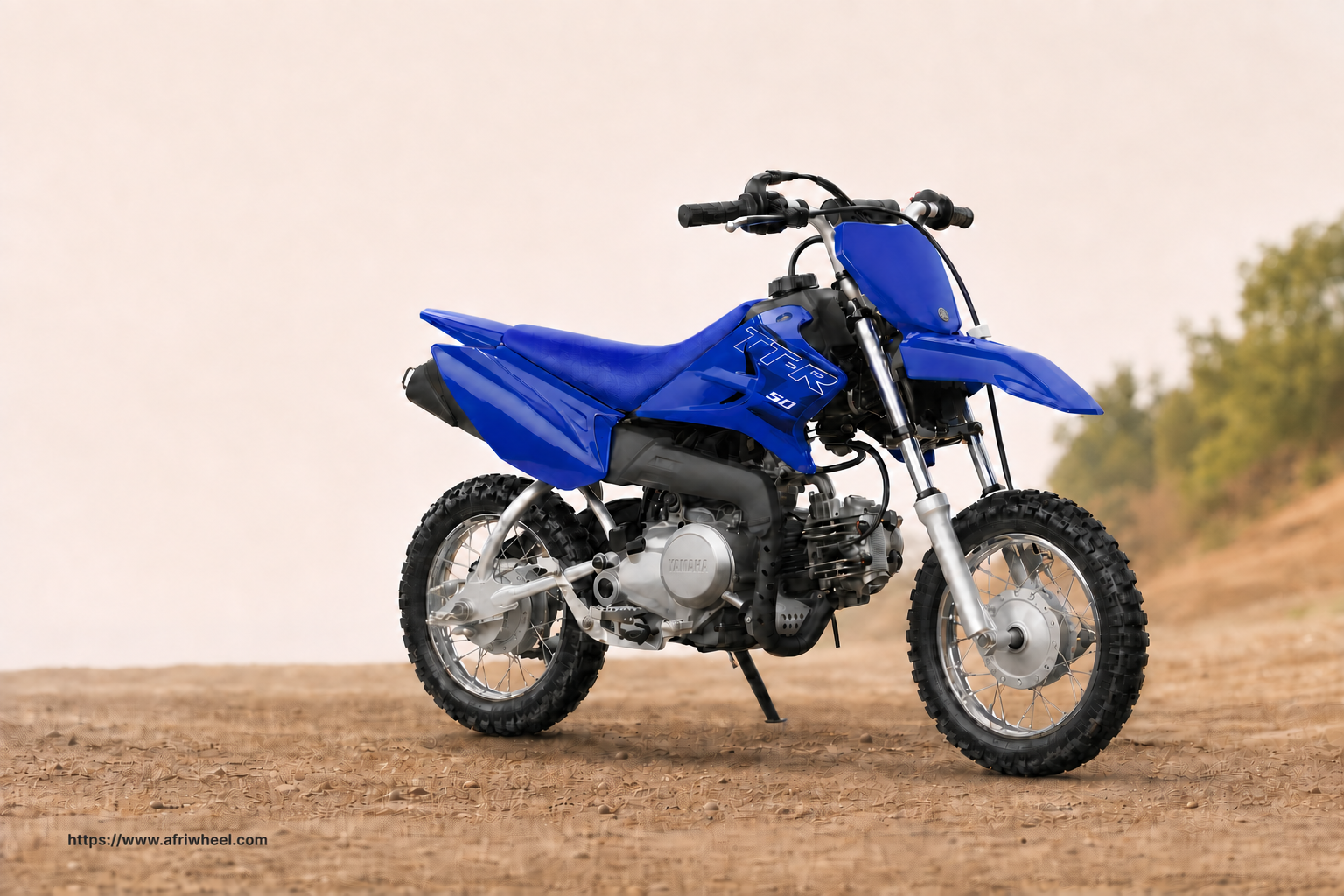
South African buyers considering the TT-R50E are looking at a youth competition motorcycle in Yamaha's current South African range. It is not simply another badge within a broad Yamaha family: the verified line-up consists of TT-R50E, and those are the derivatives against which price and equipment should be checked. It is primarily suited to closely supervised young beginners learning throttle, balance and braking on controlled private ground. By contrast, it should not be shortlisted by public-road use, adult transport or riders who have outgrown its youth dimensions and controls. This distinction gives the model a practical role and prevents an unsuitable use case from being disguised by attractive specifications.
The engine and driveline establish the character of the range. Verified entries include engine capacity 50 cc, engine cycle 4-stroke, cylinder layout Single cylinder, and cooling Air-cooled, followed by transmission 3-speed, semi auto (automatic clutch), gear count 3, and fuel capacity 3 litres. A power number without its engine speed can mislead, just as a gear count says little about ratio spread or low-speed control, so the fields are kept together. Where output is absent, displacement and marketing language are not used to manufacture it. Fuel capacity is similarly treated as a planning input rather than a range promise. The correct service fluid, starting procedure and maintenance schedule must come from the exact manual supplied with the South African product.
For packaging and rider fit, Yamaha's mapped values provide wheelbase 925 mm, seat height 555 mm, and kerb weight 57 kg. The figures help set expectations about reach, storage and transport, yet their definitions must remain intact. A dry-weight number excludes items that may be present during use, while kerb weight can still exclude luggage and rider equipment. Seat height does not capture foam shape or suspension movement. Before committing, a buyer should verify control reach, the force needed to lift the machine from its stand or ground, turning clearance, tie-down access and whether the intended transport equipment is rated for the complete load.
Confirmed cycle parts for the TT-R50E comprise front suspension 22mm inverted fork, and rear suspension Monocross, single shock, together with front brake Drum, and rear brake Drum and only a limited set of locally confirmed details. The purpose of listing them is to support accurate comparison, not to award a handling score without riding evidence. Brake feel, suspension control and tyre behaviour depend on maintenance and operating conditions. The owner should understand every available adjustment before changing it, retain a known baseline, and use approved tyre sizes and pressures. Off-road and competition users need especially frequent checks because impacts, mud and washing can alter chains, spokes, bearings, pads and controls between outings.
No electronic convenience package is safely claimed for the TT-R50E; the undecided fields include ABS, traction control, instrument display, phone and navigation support, and under-seat storage. For a youth product, the useful delivery check is mechanical and supervisory: an adult should learn the shut-off control, starting sequence, fuel and oil requirements, throttle or power-limiting provision when one is documented, chain or shaft care, tyre pressures and pre-ride inspection. Any safety feature must be demonstrated on the exact unit rather than inferred from a related youth model or a photograph.
Choosing TT-R50E starts with the young rider's physical fit, demonstrated control skills and coaching environment rather than age alone. An adult should verify seat reach, lever reach, starting procedure, throttle control and the ability to pick up and stop the machine safely. Use belongs on a controlled off-road site with active supervision, correctly fitted helmet and body protection, a mechanically sound motorcycle and a progression plan that never treats engine capacity as a substitute for readiness.
There is one mapped derivative, TT-R50E, so the model decision is mainly about suitability, colour, dealer terms and any accessories rather than a trim ladder. The recorded South African price observation is R34,950, described as dealer advertised, and was checked on 2026-08-10. It is a vehicle-price reference rather than a promise of an on-road total; registration, delivery, finance, insurance, accessories and dealer preparation require separate confirmation. A useful comparison sheet should put the exact derivative name, model year, transmission, standard equipment, colour, warranty, service requirements and all fees on one line. That prevents an attractive monthly repayment from hiding a longer term, deposit, balloon payment or excluded cost. It also prevents a discounted older unit from being mistaken for the current specification. A written quotation should identify any optional accessories separately and say whether fitment changes warranty, mass, dimensions or intended use.
Some commonly requested details are not safely published for the TT-R50E. In the principal buyer groups, the absent fields include maximum power, power peak, maximum torque, torque peak, clutch, final drive, claimed fuel consumption, and overall length. Those blanks should be handled as questions for Yamaha or an authorised dealer, never as zero values or evidence that equipment is absent. They also should not be filled from a similarly named US, European or Australian model unless Yamaha documents exact equivalence. The locally mapped use statement is not stated in the reviewed material. Warranty duration, service intervals, payload, towing, emission or noise values require their own exact South African evidence before they can influence an ownership score.
Taken as a whole, the TT-R50E makes the strongest case for closely supervised young beginners learning throttle, balance and braking on controlled private ground. It should move down the list for public-road use, adult transport or riders who have outgrown its youth dimensions and controls. The final decision should follow a physical fit check, a representative test or supervised evaluation where permitted, an insurance or transport plan, and a written quote for the exact derivative. Compare only confirmed like-for-like facts, then let personal fit and operating context decide between otherwise credible choices. That approach keeps the model's real strengths visible without turning an incomplete brochure field into a marketing promise.