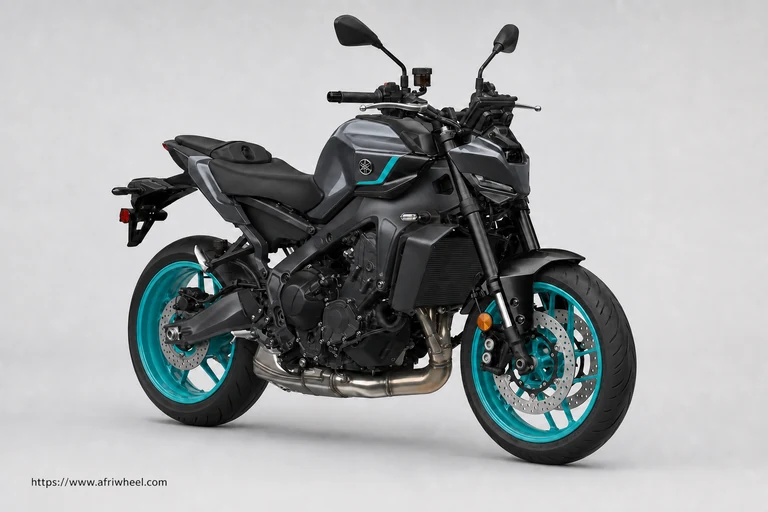
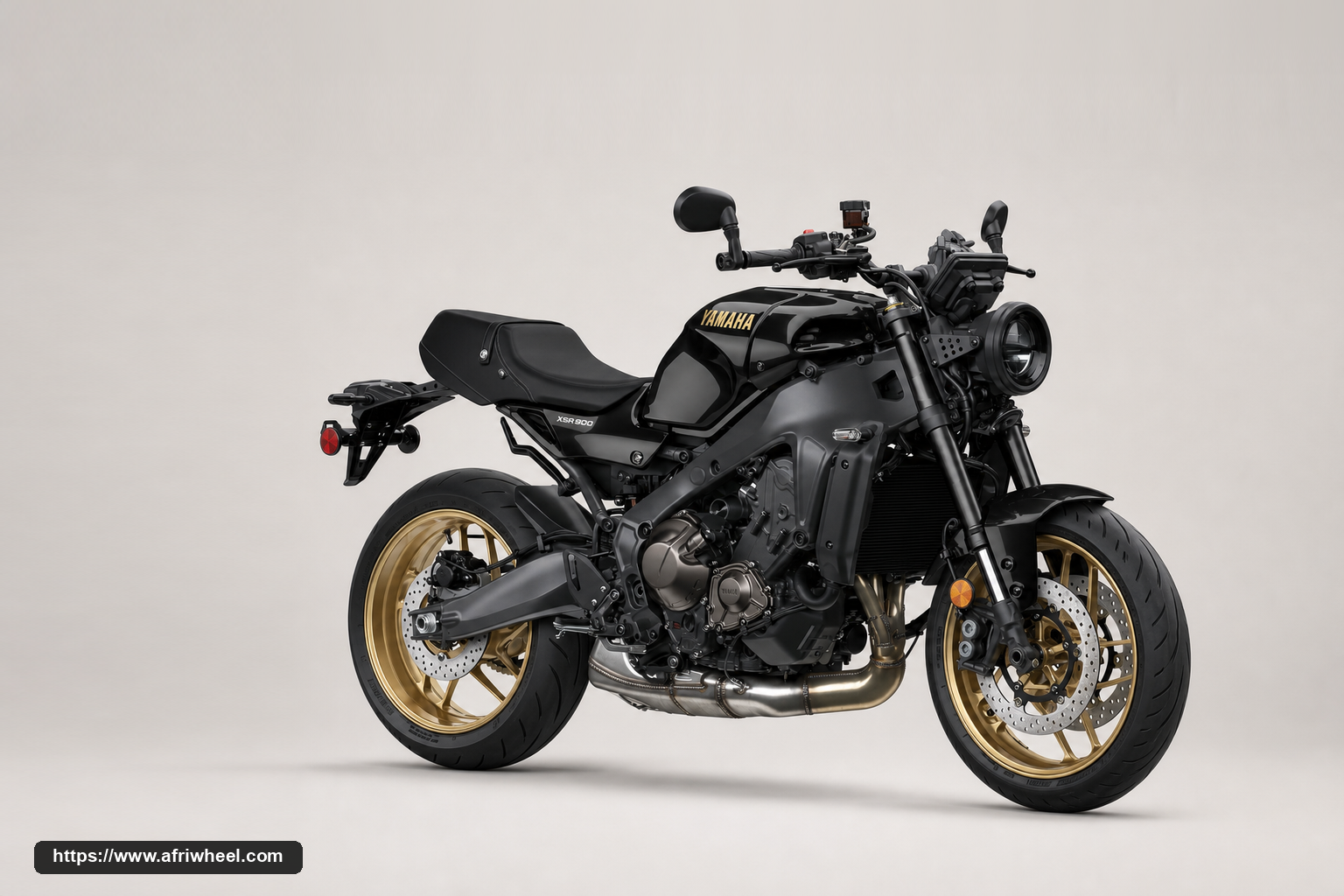
XSR900 buyer overview
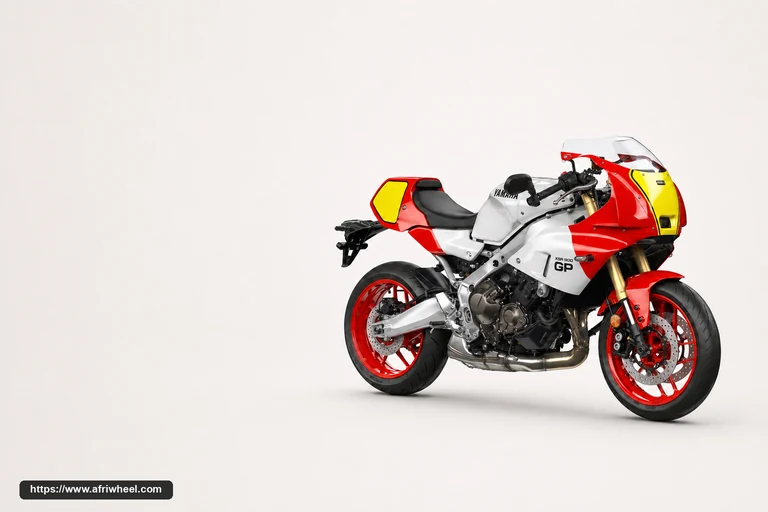
The central reason to consider the XSR900 is its defined place as a street motorcycle in Yamaha's current South African range. Yamaha's locally reviewed material supports a range made up of XSR900; colour choices are not treated as extra mechanical variants. It is designed around experienced riders wanting modern three-cylinder performance with Yamaha sport-heritage styling. It makes less sense for learners, buyers wanting full wind protection or shoppers prioritising basic low-cost transport. That buyer-first framing matters because two machines with similar engine capacities can demand very different skills, ownership budgets and legal use conditions.
Looking past the bodywork, the XSR900 is defined by engine capacity 890 cc, engine cycle 4-stroke, cylinder layout Inline triple, and cooling Liquid-cooled. Its delivery hardware is represented by transmission Constant mesh 6 speed, gear count 6, final drive Chain, and fuel capacity 14 litres. The relationship between those facts matters: engine configuration influences packaging and feel, while transmission type changes workload and use. AfriWheel does not convert that relationship into invented speed or economy claims. Owners should use the figures as shortlist filters, then confirm starting, warm-up, fuel, lubricant and service instructions from the exact document associated with the delivered model year and derivative.
Physical fit is described by overall length 2,155 mm, overall width 860 mm, overall height 1,160 mm, ground clearance 140 mm, seat height 815 mm, and kerb weight 196 kg. Each dimension answers a different question. Seat height is only a starting point for reach because seat width, suspension sag, boots and rider proportions all alter feet-down confidence. Wheelbase and overall size help with transport, storage and manoeuvring, but they cannot predict steering feel on their own. Mass needs its published definition: dry and kerb figures are not interchangeable. Anyone loading the XSR900 onto a trailer, rack or workshop stand should use the exact measured vehicle and the carrier's rated capacity rather than relying solely on a rounded catalogue number.
Underneath the XSR900, confirmed chassis information includes frame Diamond, front suspension Telescopic forks 130mm travel, front suspension travel 130 mm, rear suspension Swingarm link suspension 131mm travel, and rear suspension travel 131 mm. The stopping package is front brake Hydraulic Dual disc, front disc diameter 298 mm, rear brake Hydraulic single disc, rear disc diameter 245 mm, and ABS Dual-channel ABS; rolling dimensions are rear wheel diameter 17 inches, and rear tyre 180/55 ZR17M/C(73W) Tubeless. This hardware helps distinguish its intended environment but cannot be converted into an unverified handling score. Suspension settings may need to change for rider mass, passenger, luggage or competition conditions. ABS or traction control, when explicitly listed, supports rather than replaces technique and grip. Buyers should confirm whether tyres are tube-type or tubeless, which sizes and ratings are approved, and whether the delivered brake components match the exact model-year parts documentation.
For rider-facing equipment, the record supports headlight LED, instrument display TFT, phone and navigation support Yamaha MyRide connectivity, and local-use status Listed in Yamaha South Africa's road-motorcycle catalogue. It does not currently support a firm statement about traction control, and under-seat storage. That is a reason to verify, not a licence to assume the feature is missing or included. A handover should cover display warnings, control menus, security keys, charging points and any connected application. Technology can make operation easier, but it can also add compatibility or setup questions. The exact South African derivative, software state and fitted accessories must match the quotation, particularly when product photographs show optional equipment.
The useful question around XSR900 is how its road package fits the rider's real mix of congestion, open roads and weekend use. Seat reach, throttle response, clutch or automated-shift behaviour, steering leverage and wind exposure can matter more day to day than the largest headline number. Training, protective equipment and an insurance quote should be part of the shortlist, particularly where the engine output and tyre capability place the machine beyond an entry-level commuter.
There is one mapped derivative, XSR900, so the model decision is mainly about suitability, colour, dealer terms and any accessories rather than a trim ladder. No exact current South African amount is published in the reviewed record for XSR900. Treat any informal or foreign-market figure as non-comparable and obtain a dated written quotation for the exact product. A useful comparison sheet should put the exact derivative name, model year, transmission, standard equipment, colour, warranty, service requirements and all fees on one line. That prevents an attractive monthly repayment from hiding a longer term, deposit, balloon payment or excluded cost. It also prevents a discounted older unit from being mistaken for the current specification. A written quotation should identify any optional accessories separately and say whether fitment changes warranty, mass, dimensions or intended use.
Some commonly requested details are not safely published for the XSR900. In the principal buyer groups, the absent fields include maximum power, power peak, maximum torque, torque peak, clutch, claimed fuel consumption, wheelbase, and published dry weight. Those blanks should be handled as questions for Yamaha or an authorised dealer, never as zero values or evidence that equipment is absent. They also should not be filled from a similarly named US, European or Australian model unless Yamaha documents exact equivalence. The locally mapped use statement is Listed in Yamaha South Africa's road-motorcycle catalogue. Warranty duration, service intervals, payload, towing, emission or noise values require their own exact South African evidence before they can influence an ownership score.
Taken as a whole, the XSR900 makes the strongest case for experienced riders wanting modern three-cylinder performance with Yamaha sport-heritage styling. It should move down the list for learners, buyers wanting full wind protection or shoppers prioritising basic low-cost transport. The final decision should follow a physical fit check, a representative test or supervised evaluation where permitted, an insurance or transport plan, and a written quote for the exact derivative. Compare only confirmed like-for-like facts, then let personal fit and operating context decide between otherwise credible choices. That approach keeps the model's real strengths visible without turning an incomplete brochure field into a marketing promise.