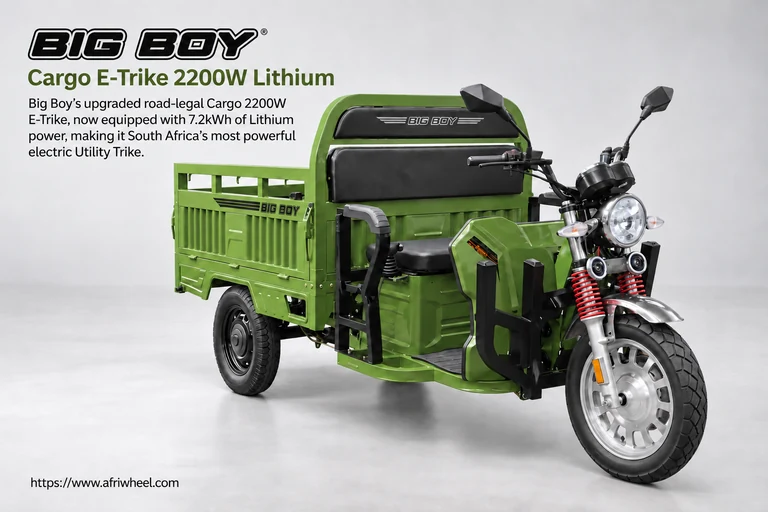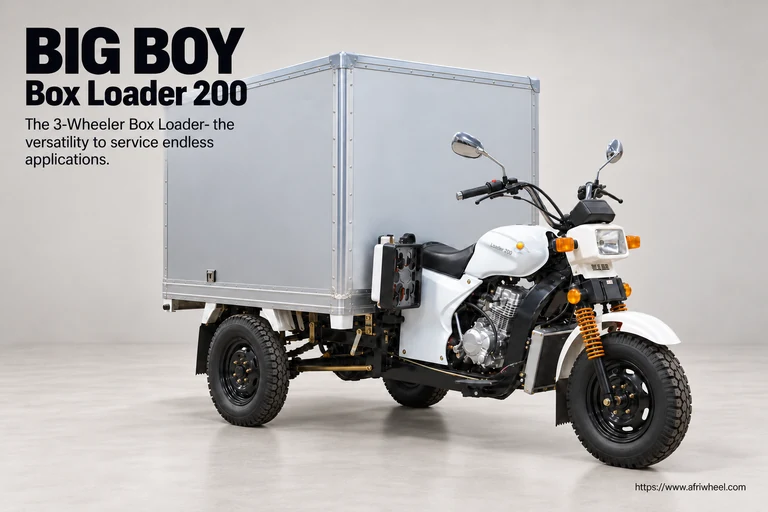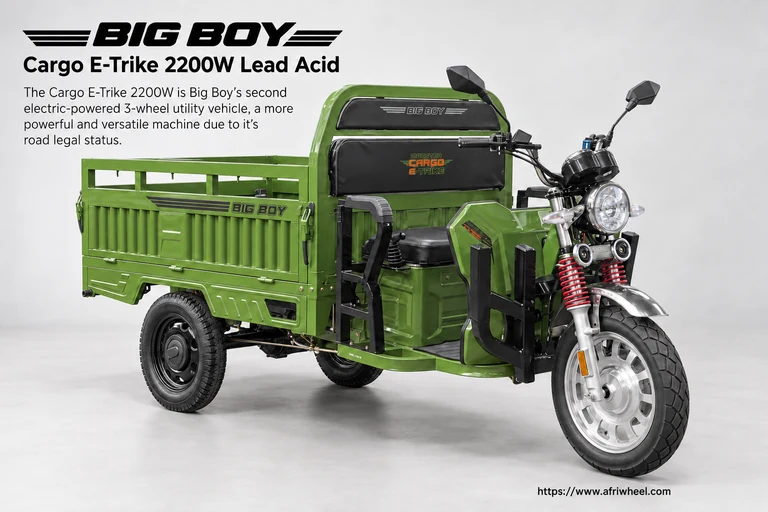
Monster EV 5000W Lithium — current South African listing buyer overview
On the local listing, Monster EV 5000W Lithium — current South African listing identifies the specific Monster EV 5000W Lithium record. The recorded amount is R91,999. That matters where a range contains cargo, commercial, electric or similarly named products with different loads, batteries, wheels or controls.
The propulsion brief is a Lithium-ion battery, 5 kW motor and 100 km claim. Its 80 km/h top-speed figure describes the operating envelope, while 140.0 Nm matters when considering starts, ramps and load. Real results depend on use.
Drive is electric, with Electric drive and Chain final drive. The charge window is 240 minutes to 80 percent or 420 minutes to full. Inspect the charger, plan recovery time and leave reserve rather than schedule every trip to the maximum.
The physical package is 1900 by 1100 by 1120 mm, with 1320 mm between the axles. The 780 mm seat and 548 kg listed mass help decide who can manage it, while 150 mm ground clearance should be compared with the actual route or loading area.
The rolling package uses 12-inch front and 12-inch rear wheels, with 6×12 and 6×12 tyres. Braking is listed as Drum at the front and Drum at the rear. Inspect tyre age, pressure, alignment and brake response at handover.
The practical limit is the listed 2-person seating and 350 kg maximum payload where supplied. Compare those figures with riders, tools, cargo, racks and accessories together. A tray or passenger seat is not permission to exceed the boundary.
The useful running-cost question is not simply range. This record gives 100 km, Lithium-ion chemistry and 240/420-minute charge windows. Ask where it can charge, how the battery should be treated and when to stop rather than drain the pack.
The variant label matters when products share a family name. For Monster EV 5000W Lithium — current South African listing, check colour, body fittings, charger or tools, seating, payload and paperwork. Those details can change ownership even when a general model description looks similar.
The purchase is ready when physical unit and paperwork agree. Inspect Monster EV 5000W Lithium — current South African listing, record its condition, verify price and support terms, and plan maintenance around the real route rather than a best-case claim.
For this record, the useful comparison line is a claimed range of 100 km. The product carries the recorded 2-person seating description and 350 kg payload value where supplied. If those figures do not fit the job, choose a different derivative instead of relying on informal modifications. Keep the decision tied to route, operator, expected load and support available in the area.
This exact Monster EV 5000W Lithium — current South African listing record is priced at R91,999. Keep its model name, powertrain, seating, payload, range or fuel figure and equipment together when comparing it with another Big Boy listing.
Weight and load should be treated together. The listed mass describes the vehicle, while payload covers people, cargo, accessories and any additions. Keep those figures within the stated boundary and position heavy items securely. An operator who plans around the advertised maximum every day should ask about the route, braking, tyres, suspension and service effects before deciding that the variant is suitable.
The best test is representative. Ride or operate the exact variant at the speeds, surfaces and load conditions that matter, within the permitted limits. Try the turning space, braking effort, control reach, access height and parking routine. If it is electric, connect the supplied charger; if it is a cargo or utility product, inspect how the load is restrained. This is where a family description becomes a practical choice.
Service planning is part of variant selection. Note the first inspection, recurring interval, oil or filter requirements, chain or drive checks, tyre pressures and battery care instructions. Ask which tasks are time-based and which are distance-based. A variant that fits the route but cannot be supported at the required intervals will create avoidable downtime.
A variant’s value is connected to its duty cycle. A work-focused configuration may justify a larger payload or a different body, while a commuter configuration may be easier to park and cheaper to run. State the daily job, distance, rider count and storage arrangement before choosing. If the configuration does not support that brief, changing to the correct derivative is safer than adapting it informally.
Colour and visible equipment can create confusion at handover. Confirm the exact finish, decals, racks, lights, seat, tray, battery case and charger or tools included in the price. Photograph the delivered unit and retain the invoice, manual and warranty details. That simple record makes it easier to resolve a mismatch between the variant ordered and the machine supplied.
The derivative label is important because a single family can contain different batteries, bodies, load arrangements or commercial equipment. Keep this exact variant name on the quotation and match it to the machine on the floor. Ask the salesperson to list what is standard, what is optional and what is shown only for illustration. A small change in configuration can alter the useful range, carrying limit, service routine or delivery expectation.