Box Loader 200 buyer overview
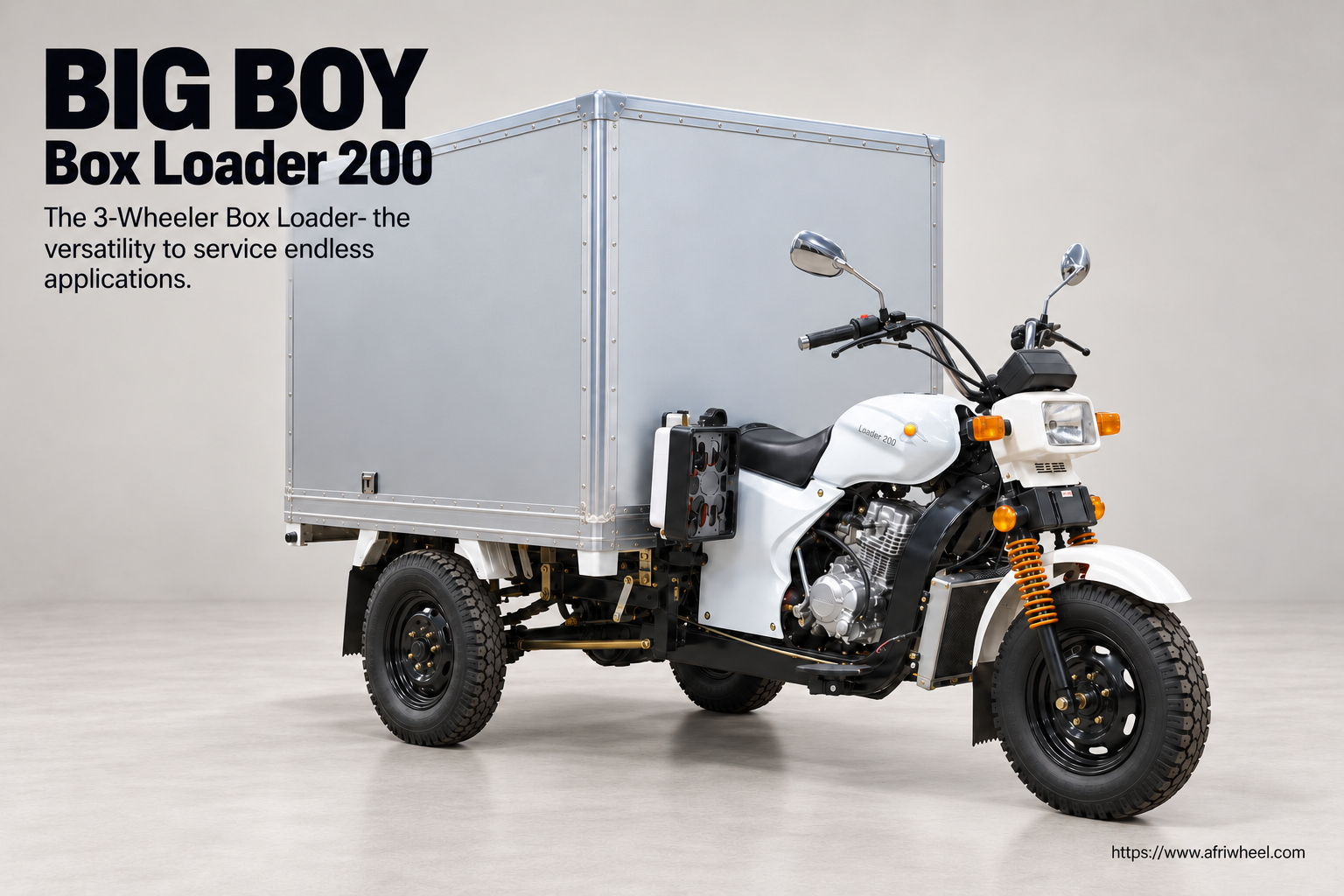
For a buyer researching Box Loader 200, the useful starting point is the job it is meant to do: a specialist utility product whose value depends on job and surface. The current South African listing records R51,999. A sound choice depends on fit, surface, load, energy or fuel planning and support for this exact product.
The petrol unit is 200 cc, with 13.0 kW and 14 Nm in the supplied record. Those numbers locate the model in the local range, but they do not guarantee a particular speed because gearing, rider mass, wind, gradient and load change the result.
Control comes through 5-speed manual and 5 listed ratios, driving the Shaft drive final drive. A handover should cover clutch effort, steering lock, throttle response and loaded behaviour as well as the headline specification.
Its recorded envelope is 1950 mm long, 1100 mm wide and 1150 mm high, with a 1250 mm wheelbase. The seat is 850 mm high, clearance is 220 mm and mass is 250.0 kg. These figures guide parking, loading, mounting and transport; they do not replace a fit check.
The record gives 17-inch and 17-inch wheels, 90/90-17 front rubber and 110/80-17 rear rubber, with Disc front and Disc rear brakes. Those details describe the equipment; a demonstration shows how it turns and stops on the buyer’s surface.
The right question is what the machine must carry and where it must go. The record gives 2 seating position(s) and 350 kg maximum payload. Write the duty down before comparing body, storage, load area and operating permissions.
Big Boy records 4.03 L/100 km and a 12-litre tank. Treat that as a comparison measure, not a guarantee: traffic, gradients, wind, load, idling, pressure and maintenance affect weekly fuel use. Confirm fuel, oil, running-in and first-service instructions.
This model makes sense when body style, powertrain, wheel package, carrying limit and price support a defined need. Make the decision around one route or job, then verify handover details.
Ask for the exact model on the quotation, current price, equipment, colour, delivery timing, warranty, service intervals and registration documents. Electric buyers should add charger, battery chemistry, charge time and range basis.
For this record, the useful comparison line is 4.03 L/100 km and a 12-litre tank. The product carries the recorded 2-person seating description and 350 kg payload value where supplied. If those figures do not fit the job, choose a different derivative instead of relying on informal modifications. Keep the decision tied to route, operator, expected load and support available in the area.
The recorded South African listing for Box Loader 200 is priced at R51,999. Its atv-utility role, 2-person seating and 350 kg payload value should be read with the exact dimensions and operating limits shown above.
The catalogue position is clearer when the buyer starts with the job rather than the badge. Think about the first and last trip of a normal week, the surface between them, who will ride or operate the machine, and what must be carried. That short description exposes whether this product’s size, control layout and powertrain are sensible. It also gives the dealer a useful brief for demonstrating the exact stock unit and quoting the right support package.
Use the model page as a focused conversation starter. Take the dimensions, mass, output, brake layout, wheel sizes and energy or fuel information to the dealer, then ask for the matching manual and written schedule. Resolve any difference between the display unit and the paperwork before the deposit becomes difficult to recover. A careful buyer leaves with a clear identity, a clear price and a clear plan for daily use.
Practical storage is part of the choice. Measure the doorway, parking bay, ramp or cargo area before signing, and allow room to turn the machine around. Check where a helmet, tools, charger, cables or loads will live, and how they will be secured. A model can have the right output and still be awkward in the place where it must be parked, charged, loaded or serviced.
Think about the full first year rather than only the purchase price. Add expected fuel or charging, tyres, brake wear, service labour, storage, transport and any practical accessories. Record who will do the work and how far that support is from the operating site. The same model can be good value for one route and poor value for another because distance, load and service access change the ownership burden.
A price comparison only helps when the products being compared perform the same role. A small road scooter, a cargo derivative and a utility machine can sit near one another in a catalogue while carrying different limits and requiring different storage. Keep the recorded amount beside the equipment list, payload, seating, energy or fuel plan and service route. The lowest number is not automatically the most economical choice if the machine cannot complete the real duty.
The body style sets expectations but does not answer every legal or operating question. A work vehicle may be intended for controlled property, while a road model may still need documents and equipment checked for the buyer’s use. Ask the seller to state the permitted use, seating arrangement and registration position in writing where these affect the decision. Do not infer them from a photograph or a seat shape.