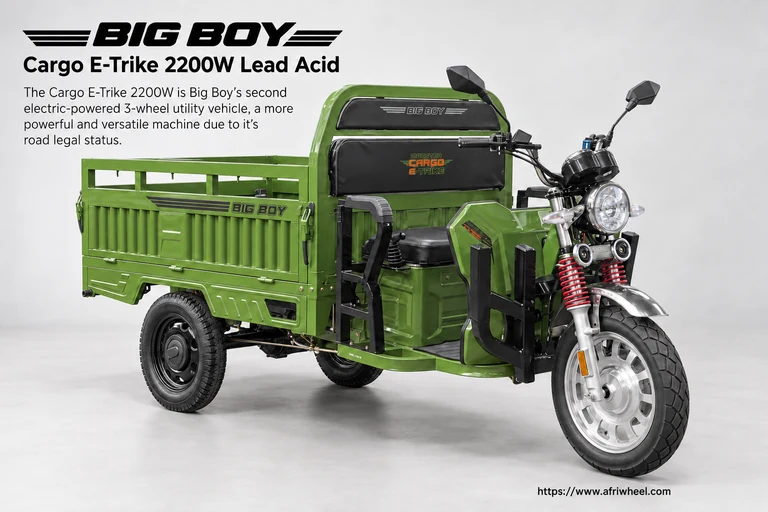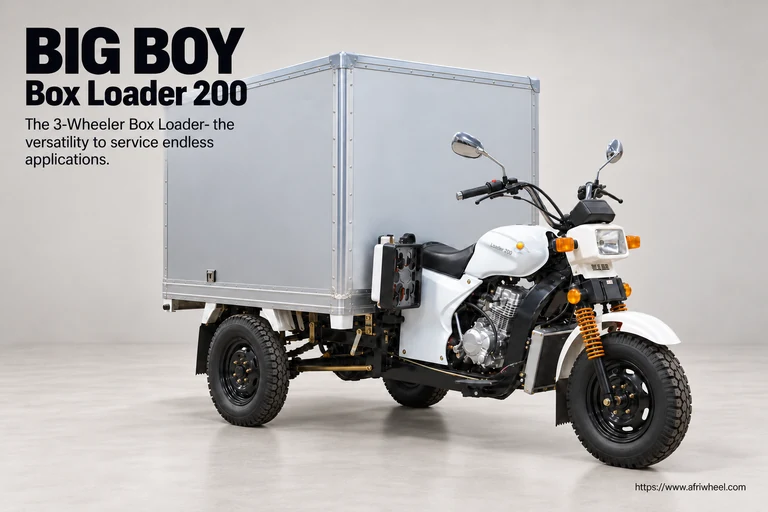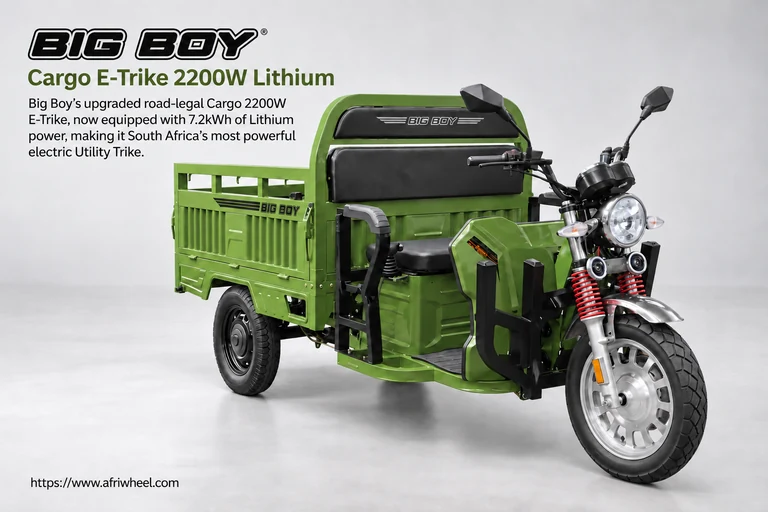
Elec-Trike 800W buyer overview
Elec-Trike 800W is a work-focused utility product for farms, sites or controlled property. The South African Big Boy listing places the 2026 product at R19,999; that amount is the starting point for a written quote, not a promise that delivery, registration or accessories are included.
The propulsion brief is a Lithium-ion battery, 0.64 kW motor and 60 km claim. Its 45 km/h top-speed figure describes the operating envelope, while 22.4 Nm matters when considering starts, ramps and load. Real results depend on use.
This model pairs Electric drive with Chain final drive and a stated 240/360-minute charge pattern. Check whether the workday allows that recovery and whether the charging point is safe and accessible.
The physical package is 1900 by 1100 by 1120 mm, with 1635 mm between the axles. The 780 mm seat and 260 kg listed mass help decide who can manage it, while 150 mm ground clearance should be compared with the actual route or loading area.
The rolling package uses 17-inch front and 17-inch rear wheels, with 90/90-17 and 110/80-17 tyres. Braking is listed as 110 drum brake at the front and 130 drum brake at the rear. Inspect tyre age, pressure, alignment and brake response at handover.
The right question is what the machine must carry and where it must go. The record gives 2 seating position(s) and 300 kg maximum payload. Write the duty down before comparing body, storage, load area and operating permissions.
Pair the 60 km claim with a daily schedule. The Lithium-ion pack takes 240 minutes to 80 percent and 360 minutes to full. Check charging location, cable path, electricity supply and how payload, speed and temperature affect distance.
This model makes sense when body style, powertrain, wheel package, carrying limit and price support a defined need. Make the decision around one route or job, then verify handover details.
At the showroom, check mounting height, control reach, steering lock, visibility, brake effort, tyre markings, fluid levels, fasteners and lighting. If it carries a passenger or load, reproduce that use safely.
For this record, the useful comparison line is a claimed range of 60 km. The product carries the recorded 2-person seating description and 300 kg payload value where supplied. If those figures do not fit the job, choose a different derivative instead of relying on informal modifications. Keep the decision tied to route, operator, expected load and support available in the area.
The recorded South African listing for Elec-Trike 800W is priced at R19,999. Its atv-utility role, 2-person seating and 300 kg payload value should be read with the exact dimensions and operating limits shown above.
Every range claim or fuel figure needs context. Traffic, road speed, wind, hills, payload, tyre pressure, battery temperature and maintenance all influence the distance achieved. Use the listed value to compare the model with a close alternative, then build a route reserve rather than planning to the last kilometre or litre. A realistic weekly plan is more useful than repeating a best-case number from a product page.
The body style sets expectations but does not answer every legal or operating question. A work vehicle may be intended for controlled property, while a road model may still need documents and equipment checked for the buyer’s use. Ask the seller to state the permitted use, seating arrangement and registration position in writing where these affect the decision. Do not infer them from a photograph or a seat shape.
Use the model page as a focused conversation starter. Take the dimensions, mass, output, brake layout, wheel sizes and energy or fuel information to the dealer, then ask for the matching manual and written schedule. Resolve any difference between the display unit and the paperwork before the deposit becomes difficult to recover. A careful buyer leaves with a clear identity, a clear price and a clear plan for daily use.
Brakes and tyres deserve attention equal to the engine or motor. Confirm the tyre markings, pressure recommendations, wheel condition and brake response on delivery. For a utility product, ask how the permitted load changes stopping distance and how often the working surface damages tyres. For a road machine, make sure the rider understands the controls before carrying a passenger or adding luggage.
Practical storage is part of the choice. Measure the doorway, parking bay, ramp or cargo area before signing, and allow room to turn the machine around. Check where a helmet, tools, charger, cables or loads will live, and how they will be secured. A model can have the right output and still be awkward in the place where it must be parked, charged, loaded or serviced.
Rider fit deserves a physical check. Mount the vehicle, reach both controls, turn the steering from lock to lock and hold it at walking pace. Note whether the seat height, mass and wheelbase feel manageable for the person who will use it every day. If the product is for work, repeat the check with the usual load secured correctly. A specification table prepares the questions; it cannot replace this short demonstration.